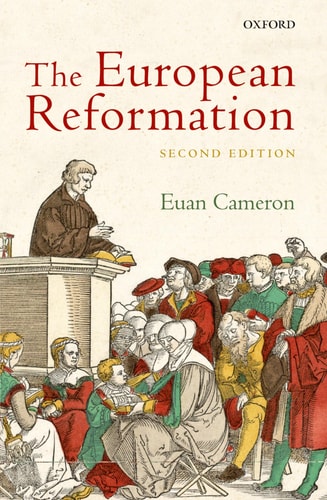
The European Reformation
0
0
As an Amazon Associate and affiliate partner, Menrva Books earns from qualifying purchases. Learn more
Author Description
Since its first appearance in 1991, The European Reformation has offered a clear, integrated, and coherent analysis and explanation of how Christianity in Western and Central Europe from Iceland to Hungary, from the Baltic to the Pyrenees splintered into separate Protestant and Catholic identities and movements.Catholic Christianity at the end of the Middle Ages was not at all a uniformly 'decadent' or corrupt institution: it showed clear signs of cultural vigour and inventiveness. However, it was vulnerable to a particular kind of criticism, if ever its claims to mediate the grace of God to believers were challenged. Martin Luther proposed a radically new insight into how God forgives human sin. In this new theological vision, rituals did not 'purify' people; priests did not need to be set apart from the ordinary community; the church needed no longer to be an international body.For a critical 'Reformation moment', this idea caught fire in the spiritual, political, and community life of much of Europe. Lay people seized hold of the instruments of spiritual authority, and transformed religion into something simpler, more local, more rooted in their own community. So were born the many cultures, liturgies, musical traditions and prayer lives of the countries of Protestant Europe.This new edition embraces and responds to developments in scholarship over the past twenty years. Substantially re-written and updated, with both a thorough revision of the text and fully updated references and bibliography, it nevertheless preserves the distinctive features of the original, including its clearly thought-out integration of theological ideas and political cultures, helping to bridge the gap between theological and social history, and the use of helpful charts and tables that made the original so easy to use.
Menrva's Summary
THE THESIS
This work investigates the complex mechanisms through which Western and Central European Christianity fractured into distinct Protestant and Catholic identities during the sixteenth century. Euan Cameron, a respected scholar in the field, utilizes a synthesis of theological analysis and social history to challenge the notion that the pre-Reformation Church was merely a decadent institution. By examining the intersection of Martin Luther's theological insights with the political and communal realities of the era, the author provides a comprehensive framework for understanding the rapid spread and institutionalization of the Reformation across diverse European regions.
THE SCOPE MAP
What You Will Find
- A geographic analysis covering Western and Central Europe from Iceland to Hungary.
- An examination of the transition from late medieval Catholic structures to the emergence of varied Protestant liturgies and traditions.
- A synthesis of theological developments and their impact on local political and social life.
- Updated scholarly references and bibliographies reflecting two decades of historiographical progress.
THE AUTHORITY PERSPECTIVE
Experts frequently cite this work as a foundational text for understanding the Reformation due to its ability to bridge the gap between complex theological debates and broader social history. Readers often note the clarity of the prose and the utility of the included charts and tables in navigating the dense historical material.
Page Count:
592
Publication Date:
2012-05-16
Publisher:
Oxford University Press
ISBN-10:
0199547858
ISBN-13:
9780199547852
Religion
History
Reformation
Europe
European History
Christianity
Theology
Community Tags
Other Editions(2)

Similar Books