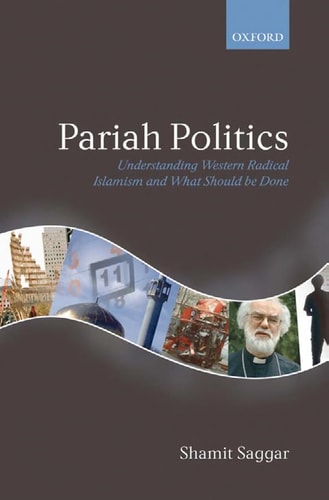
Pariah Politics: Understanding Western Radical Islamism and What Should be Done
0
0
As an Amazon Associate and affiliate partner, Menrva Books earns from qualifying purchases. Learn more
Author Description
Pariah Politics breaks new ground in examining the issue of western Islamist extremism from the perspective of government. It links underlying causes to the capacity of governments to respond directly and to influence others. The book contains four main messages.Focusing on causes, not symptoms. The book identifies four big causal drivers: settled disadvantage, social isolation, grievance and oppositional cultures, and the volatile dynamics of global Islam. Governments can hope to influence the first two, using existing and innovative policy levers. The scope to make big changes in the latter two is severely limited.The circle of tacit support. Action by government to counter terrorism has relied too heavily on security policy measures to intercept or disrupt men of violence. This emphasis is misplaced. Though important, this fails to address the moral oxygen for violence and confrontation that exists within Muslim communities.Better focus and better levers. Ministers and officials need to think and act smart. They need to push ahead with social inclusion policies to broaden opportunity. They need to make more use of community-based strategies to isolate extremism. They need to promote civil society actions so that affected communities can take control of their own reputational future. And, they desperately need to avoid making things worse.Reputations matter. The pariah status of western Muslims has worsened by the fallout from terrorism. Few have anything good to say about western Muslims; still fewer can imagine an optimistic future. Yet earlier demonised groups, such as Jews or Asian refugees, have overcome significant hurdles, moving from pariahs to paragons. A credible willingness to tackle extremism is the most important first step to a reputational turnaround.
Menrva's Summary
THE THESIS
This book investigates the intersection of Western government policy and the rise of Islamist extremism, questioning how states can effectively address the root causes of radicalization. Author Shamit Saggar, a political scientist and public policy expert, utilizes a framework that distinguishes between manageable social factors and broader, more volatile global dynamics. He argues that current security-heavy approaches are insufficient and proposes a shift toward community-based strategies and social inclusion to mitigate the influence of extremist ideologies.
THE SCOPE MAP
What You Will Find
- Analysis of four primary causal drivers: settled disadvantage, social isolation, grievance cultures, and global Islamic dynamics.
- Evaluation of government policy levers for social inclusion and community engagement.
- Examination of the reputational challenges faced by Western Muslim communities.
- Comparative historical context regarding the integration of previously marginalized groups.
THE AUTHORITY PERSPECTIVE
Experts and policy analysts recognize this work as a significant contribution to the discourse on counter-extremism and social integration. Readers frequently note the pragmatic, evidence-based approach Saggar takes in balancing security concerns with long-term social policy.
Page Count:
352
Publication Date:
2009-01-15
Publisher:
Oxford University Press
ISBN-10:
0199558132
ISBN-13:
9780199558131
Muslims europe
Terrorism
Great Britain
Islam europe
Public Policy
Islam And Politics
Muslims
International relations
Sociology
Islam
Community Tags
Similar Books