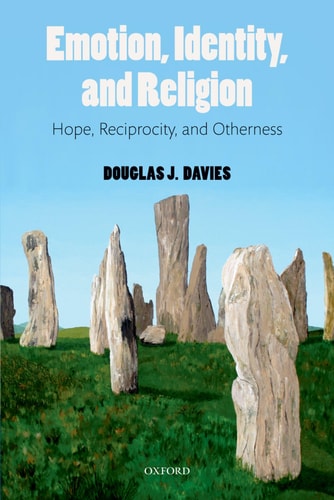
Emotion, Identity, and Religion: Hope, Reciprocity, and Otherness
0
0
As an Amazon Associate and affiliate partner, Menrva Books earns from qualifying purchases. Learn more
Author Description
Deep emotions pervade our human lives and ongoing moods echo them. Religious traditions often shape these and give devotees a sense of identity in a hopeful and meaningful life despite the conflicts, confusion, pain and grief of existence. Driven by anthropological and sociological perspectives, Douglas J. Davies describes and analyses these dynamic tensions and life opportunities as they are worked out in ritual, music, theology, and the allure of sacred places.Davies brings some newer concepts to these familiar ideas, such as 'the humility response' and 'moral-somatic' processes, revealing how our sense of ourselves responds to how we are treated by others as when injustice makes us 'feel sick' or religious ideas of grace prompt joyfulness. This sense of embodied identity is shown to be influenced not only by 'reciprocity' in the many forms of exchange, gifts, merit, and actions of others, but also by a certain sense of 'otherness, whether in God, ancestors, supernatural forces or even a certain awareness of ourselves.Drawing from psychological studies of how our thinking processes engage with the worlds around us we see how difficult it is to separate out 'religious' activity from many other aspects of human response to our environment. Throughout these pages many examples are taken from the well-known religions of the world as well as from local and secular traditions.
Menrva's Summary
THE THESIS
This work investigates how religious traditions shape human identity and emotional experience through the interplay of hope, reciprocity, and the perception of otherness. Douglas J. Davies, a scholar of anthropology and sociology, utilizes a multidisciplinary framework to examine how ritual, theology, and sacred spaces influence the human condition. By integrating psychological insights with sociological observation, the author argues that religious activity is inextricably linked to broader human responses to the environment and social interaction.
THE SCOPE MAP
What You Will Find
- Analysis of the 'humility response' and 'moral-somatic' processes in religious practice.
- Examination of how social injustice and grace manifest as physical, embodied sensations.
- Comparative study of major world religions alongside local and secular traditions.
- Exploration of the role of ritual, music, and theology in constructing personal identity.
THE AUTHORITY PERSPECTIVE
Scholars and students of religious studies frequently cite this text for its innovative synthesis of somatic experience and theological theory. Experts highlight the author's ability to bridge the gap between abstract religious concepts and the tangible, lived realities of human emotion.
Page Count:
304
Publication Date:
2011-04-01
Publisher:
Oxford University Press
ISBN-10:
0199551537
ISBN-13:
9780199551538
Philosophy
Psychology
Religion
Anthropology
Sociology
Community Tags
Similar Books