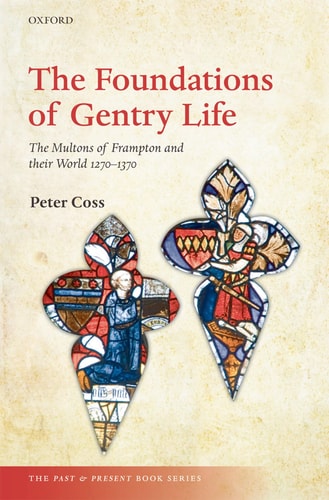
The Foundations of Gentry Life: The Multons of Frampton and their World 1270-1370
0
0
As an Amazon Associate and affiliate partner, Menrva Books earns from qualifying purchases. Learn more
Author Description
In The Foundations of Gentry Life, Peter Coss examines the formative years of the English gentry. In doing so, he explains their lasting characteristics during a long history as a social elite, including adaptability to change and openness to upward mobility from below, chiefly from the professions.Revolving around the rich archive left by the Multons of Frampton in South Lincolnshire, the book explores the material culture of the gentry, their concern with fashion and their obsession with display. It pays close attention to the visitors to their homes, and to the social relationships between men and women. Coss shows that the gentry household was a literate community, within a literate local world, and he studies closely the consumption of literature, paying particular attention to household entertainment.Beyond their households, then gentry could assert their pre-eminence in the local community through involvement with the Church and the management of their estates. Treating the relationship between gentry and Church in both devotional and institutional terms, Coss shows how religious practice was a means for the gentry to assert social dominance, and they increasingly treated the Church as a career path for their kin. Protecting their estates was of similar importance, and legal expertise was highly prized-it consequently provided a major means of entry into the gentry, as well as offering further opportunities for younger sons.Overall, Coss reveals that the cultural horizons of the gentry were essentially local. Nevertheless there were wider dimensions, and the book concludes with observations on how national and chivalric concerns interacted with the rhythms of regional life.
Menrva's Summary
THE THESIS
This work investigates the formative social, cultural, and economic structures of the English gentry between 1270 and 1370. Peter Coss, a specialist in medieval social history, utilizes the extensive archival records of the Multon family of Frampton to construct a detailed portrait of this elite class. By analyzing their domestic habits, religious involvement, and estate management, he argues that the gentry's longevity as a social power was rooted in their adaptability and strategic integration into professional and ecclesiastical spheres.
THE SCOPE MAP
What You Will Find
- Analysis of the Multon family archives in South Lincolnshire.
- Examination of gentry material culture, including fashion and household display.
- Study of the intersection between gentry life, local church management, and career advancement.
- Exploration of the role of legal expertise and literacy in maintaining social status.
THE AUTHORITY PERSPECTIVE
Historians and medievalists frequently cite this work as a foundational text for understanding the development of the English gentry during the late thirteenth and fourteenth centuries. Experts highlight the book's meticulous use of primary source archives to bridge the gap between local household dynamics and broader national social trends.
Page Count:
320
Publication Date:
2010-05-20
Publisher:
Oxford University Press
ISBN-10:
0199560005
ISBN-13:
9780199560004
History
Great Britain
British History
Social History
Community Tags
Similar Books