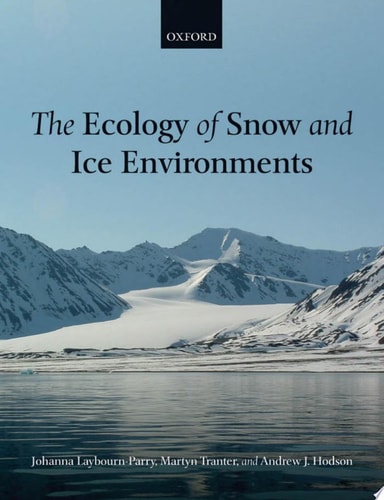
The Ecology of Snow and Ice Environments
0
0
As an Amazon Associate and affiliate partner, Menrva Books earns from qualifying purchases. Learn more
Author Description
Snow and ice environments support significant biological activity, yet the biological importance of some of these habitats, such as glaciers, has only recently gained appreciation. Collectively, these ecosystems form a significant part of the cryosphere, most of which is situated at high latitudes. These ice environments are important sentinels of climate change since the polar regions are presently undergoing the highest rates of climate warming, resulting in very marked changes in the extent of ice caps, glaciers, and the sea ice. Glacial systems are also regarded as an analogue for astrobiology, particularly for Mars and the moons of Jupiter (e.g. Europa), and one of the justifications for research in this area is its potential value in astrobiology.This timely and accessible volume draws together the current knowledge on life in snow and ice environments. It describes these often complex and often productive ecosystems, their physical and chemical conditions, and the nature and activity of the organisms that have colonised them. The cryosphere is the domain of extremophiles, organisms able to adapt to the physiological and biochemical challenges of harsh cold conditions where liquid water may only be present for relatively short periods each year. The majority of extremophiles in ice and snow are microorganisms.The Ecology of Snow and Ice Environments is intended for the non-specialist, enabling environmental scientists to understand the biological functioning of extreme cold environments and for biologists to gain knowledge of the nature of the cryosphere.
Menrva's Summary
THE THESIS
How do biological organisms function and thrive within the extreme, cold-dominated ecosystems of the Earth's cryosphere? The authors, experts in polar and glacial research, synthesize current scientific understanding of how microorganisms adapt to the physiological and biochemical constraints of snow and ice environments. By examining the physical and chemical conditions of these habitats, the text argues that these regions are not barren, but are instead productive ecosystems that serve as critical indicators of global climate change and potential models for astrobiological study.
THE SCOPE MAP
What You Will Find
- Analysis of biological activity within glaciers, ice caps, and sea ice.
- Examination of the physiological and biochemical adaptations of extremophiles.
- Discussion of the cryosphere as a sentinel for climate warming impacts.
- Exploration of glacial systems as terrestrial analogues for extraterrestrial environments like Mars and Europa.
THE AUTHORITY PERSPECTIVE
Experts identify this volume as a foundational resource for environmental scientists and biologists seeking to bridge the gap between physical geography and microbial ecology. Readers frequently note that the text successfully balances technical rigor with accessibility for non-specialists in the field.
Page Count:
224
Publication Date:
2012-03-24
Publisher:
Oxford University Press
ISBN-10:
0199583072
ISBN-13:
9780199583072
Science
Glaciology
Climate Change
Astrobiology
Ecology
Biology
Community Tags
Similar Books