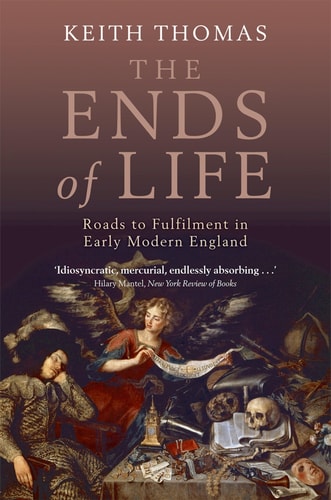
The Ends of Life: Roads to Fulfillment in Early Modern England
0
0
As an Amazon Associate and affiliate partner, Menrva Books earns from qualifying purchases. Learn more
Author Description
Hailed as "immediately and universally recognized as indispensable" (TLS) and "compellingly readable, richly researched, fascinatingly detailed, delightfully written" (LRB), here is a masterful exploration of the ways in which people sought to lead fulfilling lives, illuminating the central values of early modern England, while casting incidental light on some of the perennial problems of human existence. Keith Thomas, one of the foremost historians of our time, sheds light on the origins of the modern ideal of human fulfillment and explores the many obstacles to its realization, looking at work, wealth, possessions, friendship, family, and sociability. The book looks at the cult of military prowess, the pursuit of honor and reputation, the nature of religious belief, and the desire to be posthumously remembered. The Ends of Life offers a fresh approach to the history of early modern England, providing modern readers with much food for thought on the problem of how we should live and what goals in life we should pursue.
Menrva's Summary
THE THESIS
This work investigates the historical evolution of human fulfillment and the diverse values that defined a meaningful existence in early modern England. Sir Keith Thomas, a distinguished historian, utilizes an extensive array of primary sources to reconstruct the social and intellectual landscape of the period. He argues that the modern pursuit of personal satisfaction is rooted in specific historical conditions, examining how individuals navigated the tensions between societal expectations and individual desires. By analyzing the period's cultural norms, Thomas provides a framework for understanding how early modern people conceptualized success, legacy, and happiness.
THE SCOPE MAP
What You Will Find
- Analysis of societal pillars including work, wealth, and material possessions.
- Examination of the cultural significance of military prowess, honor, and reputation.
- Exploration of the role of religious belief and the desire for posthumous remembrance in shaping life goals.
- Investigation into the importance of friendship, family, and sociability as components of a fulfilling life.
THE AUTHORITY PERSPECTIVE
Historians and critics frequently cite this work as a foundational text for understanding the social values of the early modern period. Readers often note the meticulous research and the accessible, engaging prose style employed by Thomas throughout the analysis.
Page Count:
393
Publication Date:
2010-04-29
Publisher:
Oxford University Press
ISBN-10:
0199580839
ISBN-13:
9780199580835
History
Philosophy
Cultural History
Great Britain
Life skills
Social History
Community Tags
Similar Books