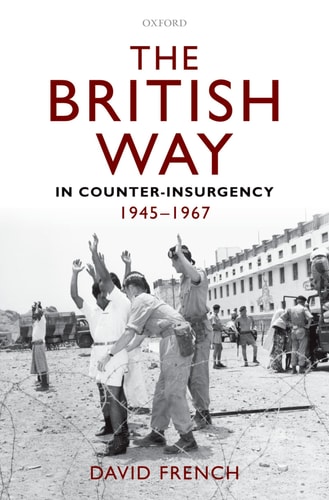
The British Way in Counter-Insurgency, 1945-1967
0
0
As an Amazon Associate and affiliate partner, Menrva Books earns from qualifying purchases. Learn more
Author Description
The claim by the Ministry of Defence in 2001 that 'the experience of numerous small wars has provided the British Army with a unique insight into this demanding form of conflict' unravelled spectacularly in Iraq and Afghanistan. One important reason for that, David French suggests, was because contemporary British counter-insurgency doctrine was based upon a serious misreading of the past.Until now, many observers believed that during the wars of decolonisation in the two decades after 1945, the British had discovered how western liberal notions of right and wrong could be made compatible with the imperatives of waging war amongst the people, that force could be used effectively but with care, and that a more just and prosperous society could emerge from these struggles. By using only the minimum necessary force, and doing so with the utmost discrimination, the British were able to win by securing the 'hearts and minds' of the people. But this was a serious distortion of actual British practice on the ground. David French's main contention is that the British hid their use of naked force behind a carefully constructed veneer of legality. In reality, they commonly used wholesale coercion, including cordon and search operations, mass detention without trial, forcible population resettlement, and the creation of free-fire zones to intimidate and lock-down the civilian population. The British waged their counter-insurgency campaigns by being nasty, not nice, to the people.The British Way in Counter-Insurgency is a seminal reassessment of the historical foundation of British counter doctrine and practice.
Menrva's Summary
THE THESIS
This book investigates whether the historical foundation of British counter-insurgency doctrine between 1945 and 1967 was based on a misreading of actual military practice. David French, a professor of military history, utilizes archival records and historical analysis to challenge the long-standing narrative that British forces relied on 'hearts and minds' strategies. He argues that the British military frequently employed systemic coercion and naked force, masking these actions behind a veneer of legality to maintain a specific public image.
THE SCOPE MAP
What You Will Find
- Analysis of British counter-insurgency campaigns during the post-1945 decolonization era.
- Examination of tactical methods including mass detention, population resettlement, and free-fire zones.
- Evidence derived from primary military records and historical documentation of colonial conflicts.
- A critical reassessment of the 'minimum force' doctrine versus actual operational reality.
THE AUTHORITY PERSPECTIVE
Historians and military scholars frequently cite this work as a critical corrective to institutional myths regarding British colonial warfare. Readers often note the rigorous use of archival evidence to dismantle the perception of British military exceptionalism in counter-insurgency operations.
Page Count:
352
Publication Date:
2012-02-01
Publisher:
Oxford University Press
ISBN-10:
0199587965
ISBN-13:
9780199587964
History
British History
Insurgency
Military History
Warfare
Community Tags
Similar Books