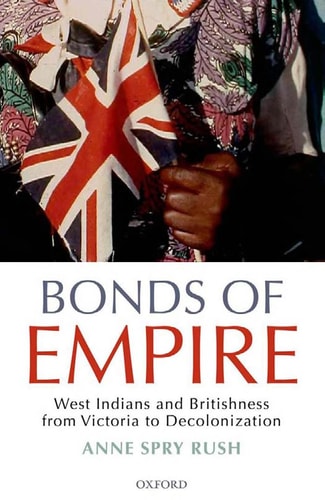
Bonds of Empire: West Indians and Britishness from Victoria to Decolonization
0
0
As an Amazon Associate and affiliate partner, Menrva Books earns from qualifying purchases. Learn more
Author Description
In the first half of the twentieth century Britishness was an integral part of the culture that pervaded life in the colonial Caribbean. Caribbean peoples were encouraged to identify with social structures and cultural values touted as intrinsically British. Many middle-class West Indians of colour duly adopted Britishness as part of their own identity. Yet, as Anne Spry Rush explains in Bonds of Empire, even as they re-fashioned themselves, West Indians recast Britishness in their own image, basing it on hierarchical ideas of respectability that were traditionally British, but also on more modern expectations of racial and geographical inclusiveness. Britain became the focus of an imperial British identity, an identity which stood separate from, and yet intimately related to, their strong feelings for their tropical homelands.Moving from the heights of empire in 1900 to the independence era of the 1960s, Rush argues that middle-class West Indians used their understanding of Britishness first to establish a place for themselves in the British imperial world, and then to negotiate the challenges of decolonization. Through a focus on education, voluntary organization, the challenges of war, radio broadcasting, and British royalty, she explores how this process worked in the daily lives of West Indians in both the Caribbean and the British Isles. Bonds of Empire thus traces West Indians' participation in a complex process of cultural transition as they manipulated Britishness and their relationship to it not only as colonial peoples but also as Britons.
Menrva's Summary
THE THESIS
This book investigates how middle-class West Indians navigated their colonial identity by adopting, adapting, and ultimately recasting the concept of Britishness between 1900 and the 1960s. Anne Spry Rush, a historian specializing in imperial and colonial cultural dynamics, utilizes a wide array of primary sources to examine the intersection of identity, race, and imperial belonging. She argues that West Indians did not merely internalize British values but actively manipulated them to secure social standing and negotiate the complex political transition toward decolonization. By analyzing the dual loyalty to both the tropical homeland and the imperial center, the work provides a framework for understanding the fluid nature of colonial identity.
THE SCOPE MAP
What You Will Find
- An analysis of cultural transition from the Victorian era through the independence movements of the 1960s.
- Examination of institutional influences including education systems, radio broadcasting, and voluntary organizations.
- Case studies on the impact of World War II and the symbolic role of British royalty in colonial life.
- A methodology focusing on the daily lived experiences of middle-class West Indians in both the Caribbean and the British Isles.
THE AUTHORITY PERSPECTIVE
Scholars view this work as a significant contribution to the study of imperial identity and the cultural mechanics of decolonization. Readers frequently note the clarity of the author's prose and the depth of her research into the social structures of the colonial Caribbean.
Page Count:
320
Publication Date:
2011-08-11
Publisher:
Oxford University Press
ISBN-10:
0199588554
ISBN-13:
9780199588558
History
West Indies
European History
Caribbean History
West Indians
Sociology
British Empire
Caribbean Area
Cultural History
National Characteristics British
Community Tags
Similar Books