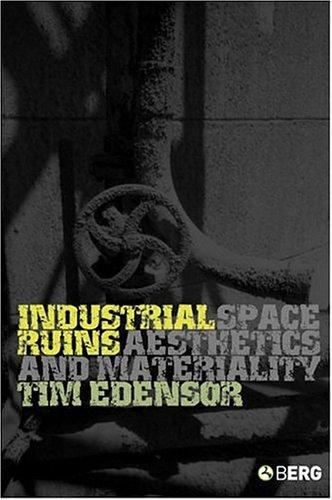
Industrial Ruins
0
0
As an Amazon Associate and affiliate partner, Menrva Books earns from qualifying purchases. Learn more
Author Description
Across Western cities, there is an increasing obsession with producing manicured landscapes. Standing in contrast to these aesthetically and socially regulated spaces are the neglected sites of industrial ruins, places on the margin which accommodate transgressive and playful activities. Providing a different aesthetic to the over-coded, over-designed spaces of the city, ruins evoke an aesthetics of disorder, surprise and sensuality, offering ghostly glimpses into the past and a tactile encounter with space and materiality. Tim Edensor highlights the danger of eradicating such evocative urban sites through policies that privilege homogeneous new developments. It is precisely their fragmentary nature and lack of fixed meaning that render ruins deeply meaningful. They blur boundaries between rural and urban, past and present and are intimately tied to memory, desire and a sense of sense of place. Stunningly illustrated throughout, this book celebrates industrial ruins and reveals what they can tell us about ourselves and our past.--Bloomsbury Publishing.
Menrva's Summary
THE THESIS
The book investigates the cultural significance and aesthetic appeal of industrial ruins in contrast to manicured urban landscapes. Tim Edensor, drawing on his expertise in cultural geography and urban studies, examines how these neglected sites offer a different aesthetic, one of disorder and sensuality, that challenges the over-regulated spaces of contemporary cities. The work explores the evocative power of ruins, their connection to memory and place, and the potential loss incurred by their eradication in favor of new developments. It argues that the fragmentary nature and ambiguity of ruins lend them profound meaning, blurring boundaries between past and present, rural and urban.
THE SCOPE MAP
- Analysis of the aesthetics of disorder, surprise, and sensuality found in industrial ruins.
- Exploration of the transgressive and playful activities that occur in these marginal urban spaces.
- Discussion of the historical and cultural significance of industrial sites as remnants of the past.
- Examination of policies that lead to the eradication of industrial ruins and the implications of this loss.
- The role of ruins in shaping memory, desire, and a sense of place.
- Contrast between the 'manicured landscapes' of modern cities and the 'aesthetics of disorder' in ruins.
- Insights into how ruins reveal aspects of ourselves and our collective past.
- Illustrated throughout with examples of industrial ruins.
THE AUTHORITY PERSPECTIVE
The book is presented as a celebration of industrial ruins, highlighting their unique aesthetic and cultural value against the backdrop of urban homogenization. It posits that these sites, often overlooked or slated for demolition, offer profound insights into history, memory, and human experience. The work suggests that their value lies precisely in their fragmented nature and lack of fixed meaning, providing a tactile and sensory encounter with space and materiality. By contrasting these evocative spaces with overly regulated urban environments, the book makes a case for preserving these important remnants of our industrial past.
Page Count:
288
Publication Date:
2005-01-01
ISBN-10:
1845200764
ISBN-13:
9781845200763
Architecture
Non-Fiction
History
Sociology
Urban Studies
Urban Exploration
Community Tags
Similar Books