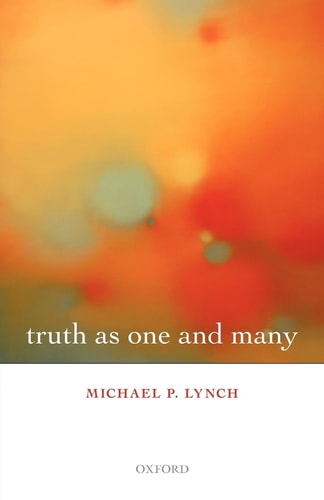
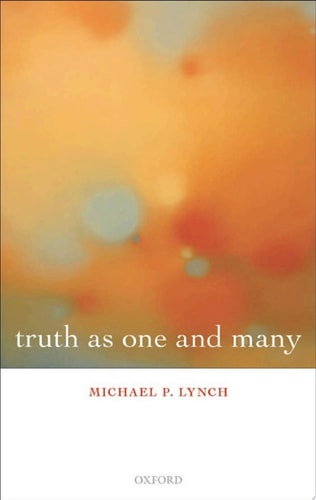
Truth as One and Many
0
0
As an Amazon Associate and affiliate partner, Menrva Books earns from qualifying purchases. Learn more
Author Description
What is truth? Michael Lynch defends a bold new answer to this question. Traditional theories of truth hold that truth has only a single uniform nature. All truths are true in the same way. More recent deflationary theories claim that truth has no nature at all; the concept of truth is of no real philosophical importance. In this concise and clearly written book, Lynch argues that we should reject both these extremes and hold that truth is a functional property. To understand truth we must understand what it does, its function in our cognitive economy. Once we understand that, we'll see that this function can be performed in more than one way. And that in turn opens the door to an appealing pluralism: beliefs about the concrete physical world needn't be true in the same way as our thoughts about matters -- like morality -- where the human stain is deepest.
Menrva's Summary
THE THESIS
Michael P. Lynch investigates whether truth possesses a singular, uniform nature or if it functions as a pluralistic property within our cognitive framework. Lynch, a professor of philosophy, challenges the binary opposition between traditional correspondence theories and deflationary accounts of truth. By proposing a functionalist approach, he argues that truth is defined by its role in human cognition, suggesting that different domains of inquiry may satisfy the requirements of truth through distinct mechanisms.
THE SCOPE MAP
What You Will Find
- A critical evaluation of traditional correspondence theories of truth
- An analysis of deflationary accounts and their limitations
- A functionalist framework for understanding truth as a property
- Arguments for truth pluralism regarding physical versus moral propositions
THE AUTHORITY PERSPECTIVE
Experts recognize this work as a significant contribution to contemporary analytic philosophy and the debate surrounding alethic pluralism. Readers frequently note the clarity of the prose, which makes complex metaphysical arguments accessible to those with a foundational interest in epistemology.
Page Count:
205
Publication Date:
2011-05-08
Publisher:
Oxford University Press
ISBN-10:
0199596301
ISBN-13:
9780199596300
Philosophy
Logic
Epistemology
Metaphysics
Truth
Community Tags
Other Editions(3)
Similar Books