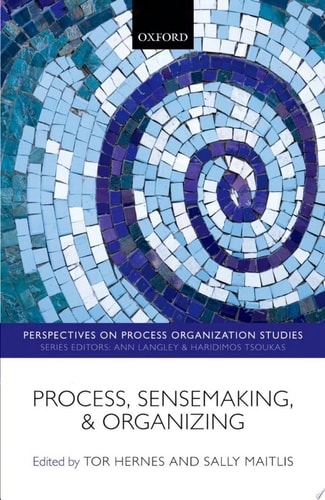
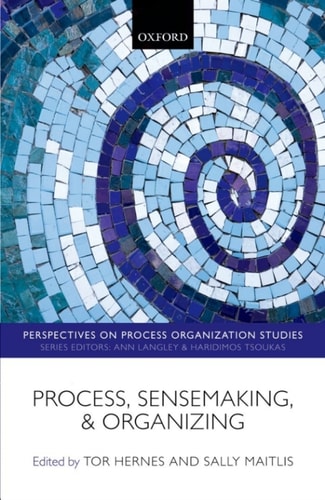
Process, Sensemaking, and Organizing
0
0
As an Amazon Associate and affiliate partner, Menrva Books earns from qualifying purchases. Learn more
Author Description
Process, Sensemaking, and Organizing is the first in a series of volumes which explore perspectives on process theories, an emerging approach to the study of organizations that focuses on (understanding) activities, interactions, and change as essential properties of organizations rather than structures and state - an approach which prioritizes activity over product, change over persistence, novelty over continuity, and expression over determination.Process and sensemaking may be seen as mutually interlocking phenomena and, as such, are cornerstones in process thinking, This volume brings together contributions from an international group of scholars energized by process organization studies. The collection offers perspectives from different disciplines, insights from diverse theoretical traditions and contexts, and parallels made with a range of cultural forms, including art, poetry, and cookery. At the same time, the chapters exhibit a clear emphasis on a process ontology, process theorizing, and narrative thinking. Across this rich and varied collection recurrent themes emerge that distinguish process theorizing from the more logico-scientific, variance-oriented research that dominates organization studies today. This book will appeal to academics, researchers, and graduate students in management, organization studies, and sociology who wish to better understand the emergent, changing, and flow-like character of organizational life and expand their understanding of the nature of sensemaking as a basis for organizing.
Menrva's Summary
THE THESIS
This volume investigates how process-oriented theories and sensemaking frameworks can redefine the study of organizations by prioritizing dynamic activity over static structures. The editors, Tor Hernes and Sally Maitlis, curate a collection of scholarly contributions that challenge the traditional logico-scientific approach to management research. By emphasizing change, interaction, and narrative, the authors argue for a shift in ontology that views organizational life as a continuous, emergent flow rather than a fixed state of existence.
THE SCOPE MAP
What You Will Find
- Theoretical frameworks for process organization studies
- Interdisciplinary perspectives integrating art, poetry, and culinary arts
- Analysis of sensemaking as a foundational mechanism for organizational change
- Comparative studies contrasting process-oriented research with variance-oriented methodologies
THE AUTHORITY PERSPECTIVE
Experts identify this work as a foundational text for scholars and graduate students interested in the evolution of organizational theory. Readers frequently note the academic density of the prose, which serves as a primary resource for those seeking to move beyond traditional structuralist management paradigms.
Page Count:
300
Publication Date:
2011-01-22
Publisher:
Oxford University Press
ISBN-10:
0199594562
ISBN-13:
9780199594566
Business
Sociology
Management
Organizational Theory
Academic
Community Tags
Other Editions(2)
Similar Books