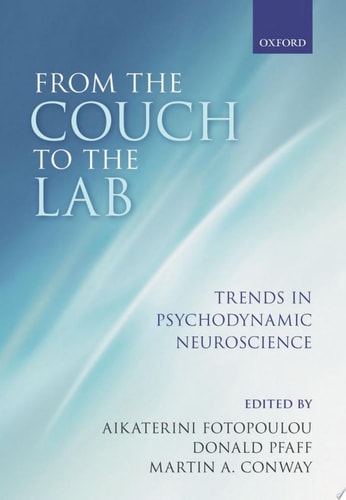
From the Couch to the Lab: Trends in Psychodynamic Neuroscience
0
0
As an Amazon Associate and affiliate partner, Menrva Books earns from qualifying purchases. Learn more
Author Description
Can the psychodynamics of the mind be correlated with neurodynamic processes in the brain? The book revisits this important question - one that scientists and psychoanalysts have been asking for more than a century.Freud envisioned that the separation between the two approaches was just a temporary limitation that future scientific progress would overcome. Yet, only recently have scientific developments shown that he was right. Technological and methodological innovations in neuroscience allow unprecedented insight into the neurobiological basis of topics such as empathy, embodiment and emotional conflict. As these domains have traditionally been the preserve of psychoanalysis and other fields within the humanities, rapprochement between disciplines seems more important than ever. Recent advances in neurodynamics and computational neuroscience also reveal richer and more dynamic brain-mind relations than those previously sketched by cognitive sciences. Are we therefore ready to correlate some neuroscientific concepts with psychoanalytic ones? Can the two disciplines share a common conceptual framework despite their different epistemological perspectives? The book brings together internationally renowned contributors from the fields of Psychoanalysis, Neuroscience and Neuro-psychoanalysis to address these questions.The volume is organised in five clear sections, Motivation; Emotion; Conscious and Unconscious Processes; Cognitive Control; and Development of the Self. With a range of chapters written by leading figures in their fields, it gives the reader a strong flavour of how much has already been achieved between the disciplines and how much more lies ahead. This important new book reveals the intrinsic challenges and tensions of this interdisciplinary endeavour and emphasises the need for a shared language and new emerging fields such as Psychodynamic Neuroscience.
Menrva's Summary
THE THESIS
This volume investigates whether the psychodynamic processes of the human mind can be empirically correlated with neurodynamic functions within the brain. The authors, including Aikaterini Fotopoulou, Donald W. Pfaff, and Martin A. Conway, assemble a multidisciplinary group of experts to bridge the historical divide between psychoanalytic theory and modern neuroscience. By examining recent technological advancements and computational models, the text argues that a shared conceptual framework is not only possible but necessary for understanding complex human experiences like empathy and emotional conflict.
THE SCOPE MAP
What You Will Find
- Analysis of neurobiological bases for empathy, embodiment, and emotional conflict.
- Integration of psychoanalytic theory with contemporary neurodynamics and computational neuroscience.
- Examination of five core domains: Motivation, Emotion, Conscious and Unconscious Processes, Cognitive Control, and Development of the Self.
- Discussion of the epistemological tensions and challenges inherent in interdisciplinary research.
THE AUTHORITY PERSPECTIVE
Experts identify this work as a significant contribution to the emerging field of neuro-psychoanalysis, providing a structured overview of current interdisciplinary progress. Readers frequently note the academic density of the prose, which serves as a foundational resource for researchers and clinicians interested in the intersection of brain science and psychological theory.
Page Count:
476
Publication Date:
2012-07-22
Publisher:
Oxford University Press
ISBN-10:
019960052X
ISBN-13:
9780199600526
Science
Psychology
Neurobiology
Neuroscience
Psychoanalysis
Community Tags
Similar Books









Reader Comments
Share Your Thoughts
No comments yet. Be the first to share your thoughts!