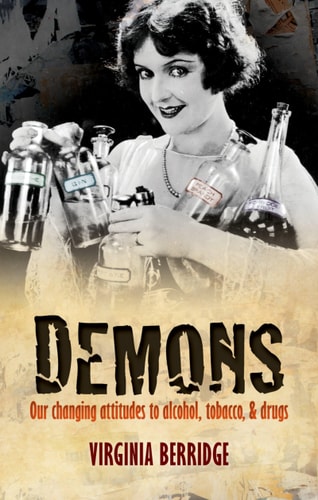
Demons: Our Changing Attitudes to Alcohol, Tobacco, and Drugs
0
0
As an Amazon Associate and affiliate partner, Menrva Books earns from qualifying purchases. Learn more
Author Description
Binge drinking, particularly in young women, has become big news. Debates about the regulation and classification of cannabis are frequently voiced. Cigarette smoking is banned in public places, and emotive public health campaigns seek to reduce its use still further. Yet there are many sides to each of these arguments, and if we look back over the last 150 years, we see massive variety in the ways societies and states have related to drugs, drink, and tobacco.Virginia Berridge offers a much-needed long view, which helps illuminate our current concerns, and shows how three separate stories overlap and inter-connect. She takes us to the socially-acceptable opium dens of Dickens's London; to the absinthe craze of fin-de-siecle Paris. She asks whether prohibition in America proved to be helpful or harmful. She looks at how tobacco was promoted as a medicinal benefit. She considers the medical use of cannabis, LSD, and other drugs. And through all this, she traces the changes in scientific and medical knowledge.This is a complex story of whether, and how, the state should intervene. How do we balance the interests of personal freedom, public well-being, healthcare, and the economy? Is substance abuse a social issue, or a medical one? As governments, health services, and the World Health Organisation grapple with these issues, the wisdom and experience of history can help map the way forward.
Menrva's Summary
THE THESIS
How have societal and state attitudes toward alcohol, tobacco, and drugs evolved over the last 150 years, and what do these shifts reveal about the tension between personal liberty and public health? Virginia Berridge, a professor of history and health policy, utilizes extensive archival research and historical analysis to trace the shifting paradigms of substance regulation. She argues that current debates are not isolated phenomena but are deeply rooted in a complex, interconnected history of medical, scientific, and political intervention. By examining the cyclical nature of these policies, the author provides a framework for understanding how governments balance economic interests with the well-being of their populations.
THE SCOPE MAP
What You Will Find
- Historical analysis of substance regulation from the Victorian era to the present day.
- Comparative study of alcohol, tobacco, and illicit drug policy across Western societies.
- Examination of the shifting role of medical and scientific expertise in shaping public policy.
- Discussion of the recurring conflict between individual freedom and state-mandated public health initiatives.
THE AUTHORITY PERSPECTIVE
Experts in public health and history identify this work as a comprehensive synthesis of the social history of addiction. Readers frequently note the academic density of the prose, which provides a rigorous, evidence-based foundation for understanding contemporary policy debates.
Page Count:
288
Publication Date:
2014-01-28
Publisher:
Oxford University Press
ISBN-10:
0199604983
ISBN-13:
9780199604982
Self-help
History
Sociology
Allied Health
Medical
Alcoholic beverages
Addiction Recovery
Addiction Studies
Public Health
Community Tags
Other Editions(2)

Similar Books