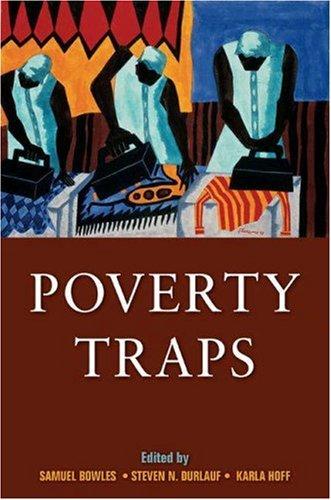
Poverty Traps
0
0
As an Amazon Associate and affiliate partner, Menrva Books earns from qualifying purchases. Learn more
Author Description
Much popular belief, and public policy, rests on the idea that those born into poverty have it in their powers to escape. But the persistence of poverty and ever-growing economic inequality around the world has led to many economists to seriously question the model of individual economic self-determination when it comes to the poor. In this book, the contributors argue that there are many conditions that may trap individuals, groups, and whole economies in intractable poverty. For the first time the editors have brought together the perspectives of economies, economic history, and sociology to assess what we know, and don't know, about such traps.
Menrva's Summary
THE THESIS
The persistence of poverty and growing economic inequality challenge the notion that individuals can solely determine their economic fate. This book brings together economists, economic historians, and sociologists to examine the conditions that trap individuals, groups, and entire economies in persistent poverty. It questions the model of individual economic self-determination, particularly for the poor, in the face of global economic disparities. The contributors assess current knowledge and identify gaps in understanding these complex poverty traps.
THE SCOPE MAP
- Analysis of conditions that create and sustain poverty traps.
- Interdisciplinary perspectives from economics, economic history, and sociology.
- Examination of intractable poverty at individual, group, and societal levels.
- Assessment of the limitations of individual economic self-determination for the poor.
- Discussion of global economic inequality and its relationship to poverty.
- Identification of knowledge gaps in understanding poverty persistence.
THE AUTHORITY PERSPECTIVE
The book is presented as a collection of interdisciplinary perspectives aimed at understanding the complex factors contributing to persistent poverty and economic inequality. By integrating insights from economics, economic history, and sociology, it seeks to challenge conventional notions of individual economic agency. The work appears to be geared towards an academic or policy-oriented audience interested in the structural causes of poverty traps.
Page Count:
256
Publication Date:
2016-01-01
ISBN-10:
0691170932
ISBN-13:
9780691170930
Economics
Non-Fiction
Sociology
Economic History
Community Tags
Similar Books