Development and Distribution
0
0
As an Amazon Associate and affiliate partner, Menrva Books earns from qualifying purchases. Learn more
Author Description
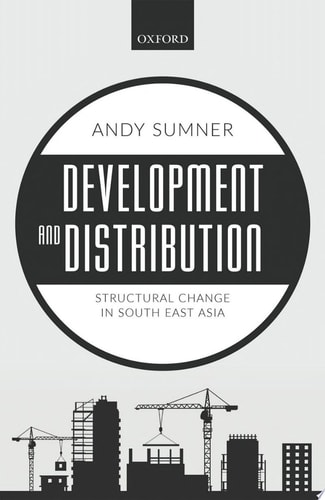
Since The Second World War, Surprisingly Few Developing Countries Have Experienced A Truly Sustained Episode Of Economic And Social Convergence Towards The Structural Characteristics Of The Advanced Nations. East Asia Has Exceeded Most Regions In Its Achievement Of Convergence, And Much Has Been Written On Comparative Industrialization And Development In North East Asia. Less Discussed Is South East Asia And The Surprising And Inclusive Transformation Several Of Its Countries Has Undergone. Development And Distribution Focuses On South East Asia And, More Specifically, On Malaysia, Indonesia, And Thailand. These Three Nations Have All Undergone A Major Transformation - In A Way Never Anticipated - From Being Poor, Agrarian Countries To Middle-income Countries With Developed Industrial And Manufacturing Bases. How Did Malaysia, Indonesia, And Thailand Achieve Such A Transformation, And How Did They Achieve The Transformation With A Form Of Economic Growth That Was Driven By Structural Transformation, But That Was 'inclusive'? Given That Historically It Has Been Thought That Structural Transformation Tends To Push Up Inequality, Whilst Inclusive Growth Necessitates Static Or Even Falling Inequality, This Last Point Is Particularly Salient To Developing Countries. Understanding How The Transformation Was Possible In A Relatively Small Space Of Time, The Extent To Which It Was Inclusive, And The Caveats And Prospects For South East Asia Is Thus An Area Of Enquiry Significant To All Developing Countries As They Seek Economic And Social Transformation.
Menrva's Summary
THE THESIS
This book investigates how Malaysia, Indonesia, and Thailand achieved rapid, inclusive economic transformation from agrarian societies to middle-income industrial nations. Andy Sumner, a professor of international development, utilizes comparative economic data and historical analysis to examine the mechanisms behind this growth. He argues that these nations successfully navigated the tension between structural industrialization and the maintenance of inclusive growth, challenging the historical assumption that rapid development inevitably increases inequality.
THE SCOPE MAP
What You Will Find
- Comparative analysis of economic growth in Malaysia, Indonesia, and Thailand.
- Examination of the transition from agrarian to industrial manufacturing bases.
- Analysis of the relationship between structural transformation and income inequality.
- Discussion of the prospects and caveats for future development in Southeast Asia.
Scope Limits
- The study does not provide a comprehensive analysis of all developing nations globally.
- The text does not offer prescriptive policy blueprints for countries outside the Southeast Asian context.
THE AUTHORITY PERSPECTIVE
Experts recognize this work as a significant contribution to development economics, particularly for its focus on the specific trajectories of Southeast Asian economies. Readers frequently note the academic rigor of the prose and the clarity with which the author addresses the paradox of inclusive growth during rapid industrialization.
Page Count:
232
Publication Date:
2018-01-01
Publisher:
Oxford University Press
ISBN-10:
0192510754
ISBN-13:
9780192510754
Economics
Economic History
Asian Studies
Community Tags
Similar Books