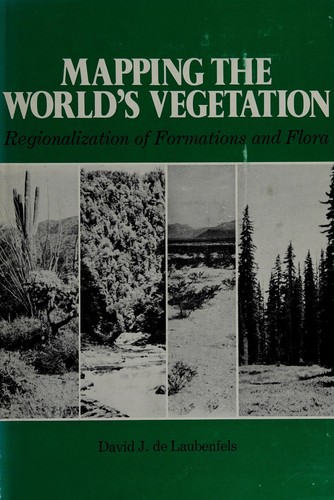
Mapping the World's Vegetation
0
0
As an Amazon Associate and affiliate partner, Menrva Books earns from qualifying purchases. Learn more
Author Description
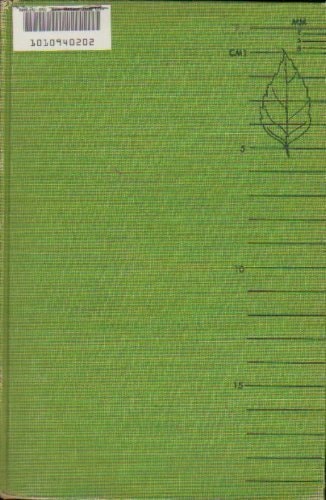
Vegetation, the plant content of an area, is a fundamental component of the natural environment on the land surface of the earth. It converts energy into food and is therefore at the base of the food chain, making vegetation a key link in natural ecosystems integrating climate, soil, and living organisms. By identifying and analyzing distinct frontiers both in vegetation formation and in world flora, this book confirms that a set of formation types and distinctive floristic realms exist. This makes possible for the first time rigorous definitions for formation types and for specific floristic realms. More important than the clarification of boundaries is the examination of causative factors which is facilitated by the demonstration of distinct categories. Thus, probable causes for the origin of distinct vegetation formation types and floristic realms are offered in this book. Such a fresh examination of the regionalization of vegetation of the world scale helps to put world vegetation mapping on a more satisfactory scientific basis, a goal of major significance to geographers. Environmentalists and ecologists will be especially interested in the research finding that the same vegetation structure recurs again and again among unrelated assemblages of plants in remote parts of the wold. verifying the fact that vegetation formations are distinct kinds of ecological systems
Menrva's Summary
THE THESIS
This book investigates the fundamental role of vegetation in the Earth's natural environment and proposes a new framework for understanding its global distribution. The author, David J. De Laubenfels, a geographer, examines distinct frontiers in vegetation formation and world flora to confirm the existence of distinct formation types and floristic realms. This work provides rigorous definitions for these categories and explores the causative factors behind their origins, aiming to place world vegetation mapping on a more satisfactory scientific basis. The research highlights recurring vegetation structures across unrelated plant assemblages, suggesting that formations are distinct ecological systems.
THE SCOPE MAP
- Analysis of distinct frontiers in vegetation formation and world flora.
- Confirmation of distinct vegetation formation types and floristic realms.
- Rigorous definitions for formation types and floristic realms.
- Examination of causative factors for the origin of vegetation formations and realms.
- Discussion of recurring vegetation structures in unrelated plant assemblages.
- Application of findings to place world vegetation mapping on a scientific basis.
THE AUTHORITY PERSPECTIVE
This book is regarded as a significant contribution to the scientific understanding of global vegetation patterns. The author's rigorous definitions and examination of causative factors are noted as key advancements. Environmentalists and ecologists are likely to find the research on recurring vegetation structures particularly compelling, as it verifies formations as distinct ecological systems. The work aims to provide a more satisfactory scientific basis for world vegetation mapping.
Page Count:
246
Publication Date:
1975-01-01
ISBN-10:
0815621728
Non-Fiction
Science
Geography
Botany
Ecology
Community Tags
Similar Books