The International Court of Justice and the Judicial Function
0
0
As an Amazon Associate and affiliate partner, Menrva Books earns from qualifying purchases. Learn more
Author Description
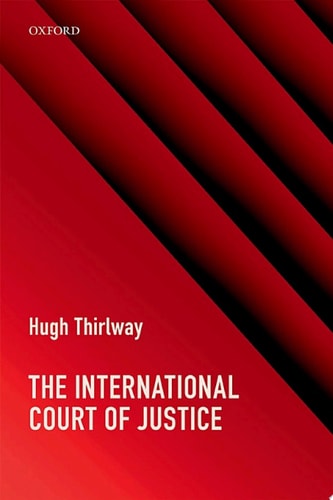
This book evaluates the concept of the function of law through the prism of the International Court of Justice. It goes beyond a conventional analysis of the Court's case law and applicable law, to consider the compromise between supranational order and state sovereignty that lies at the heart of its institutional design.It argues that this compromise prevents the Court from playing a progressive role in the development of international law. Instead, it influences the international legal order in more subtle ways, in particular, in shaping understanding of the nature or form of the international legal order as a whole. The book concludes that the role of the Court is not to advance some universal conception of international law but rather to decide the cases before it in the best possible way within its institutional limits, while remaining aware of law's deeper theoretical foundations.The book considers three key elements: firstly, it examines the historical aspects of the Court's constitutive Statute, and the manner in which it defines its judicial character. Secondly, it considers the drafting process, the function of a dissenting opinion, and the role of the individual judge, in an attempt to discern insights on the function of the Court. Finally, the book examines the Court's practice in regard to three conceptual issues which assist in understanding the Court's function: its theory of precedent; its definition of the 'international community'; and its theory on the completeness of the international legal order.
Menrva's Summary
THE THESIS
This book investigates the fundamental tension between state sovereignty and supranational order as manifested in the judicial function of the International Court of Justice. Gleider I. Hernández, a scholar of international law, utilizes a theoretical and historical framework to argue that the Court is structurally constrained from acting as a progressive agent of legal development. Instead, the author posits that the Court operates within specific institutional limits, focusing on the resolution of individual cases while subtly shaping the conceptual understanding of the international legal order.
THE SCOPE MAP
What You Will Find
- Historical analysis of the Court's constitutive Statute and its impact on judicial character.
- Examination of the drafting process and the influence of individual judges and dissenting opinions.
- Theoretical exploration of the Court's approach to precedent and the definition of the international community.
- Assessment of the completeness of the international legal order as a conceptual framework.
THE AUTHORITY PERSPECTIVE
Legal scholars and practitioners frequently cite this work for its rigorous theoretical engagement with the institutional constraints of the International Court of Justice. It is considered a foundational text for those seeking to understand the intersection of judicial practice and international legal theory.
Page Count:
368
Publication Date:
2014-07-29
Publisher:
Oxford University Press
ISBN-10:
0199646635
ISBN-13:
9780199646630
History
Non-Fiction
Law
International Law
International court of justice
Professional Career & Trade
Community Tags
Other Editions(3)
Similar Books


Reader Comments
Share Your Thoughts
No comments yet. Be the first to share your thoughts!