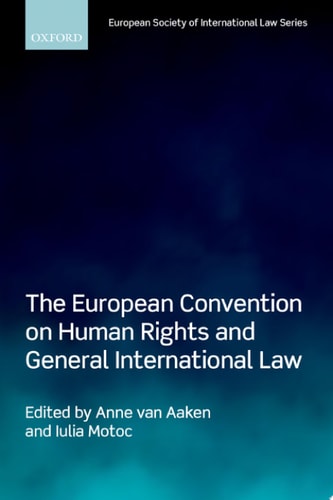
The European Convention on Human Rights and General International Law
0
0
As an Amazon Associate and affiliate partner, Menrva Books earns from qualifying purchases. Learn more
Author Description
The European Court of Human Rights is one of the main players in interpreting international human rights law where issues of general international law arise. While developing its own jurisprudence for the protection of human rights in the European context, it remains embedded in the developments of general international law. However, because the Court does not always follow general international law closely and develops its own doctrines, which are, in turn, influential for national courts as well as other international courts and tribunals, a feedback loop of influence occurs. This book explores the interaction, including the problems arising in the context of human rights, between the European Convention on Human Rights and general international law. It contributes to ongoing debates on the fragmentation and convergence of international law from the perspective of international judges as well as academics. Some of the chapters suggest reconciling methods and convergence while others stress the danger of fragmentation. The focus is on specific topics which have posed special problems, namely sources, interpretation, jurisdiction, state responsibility and immunity.
Menrva's Summary
THE THESIS
This book investigates the complex, often contradictory interaction between the European Convention on Human Rights (ECHR) and the broader framework of general international law. Editors Anne van Aaken and Iulia Motoc, both distinguished scholars and practitioners in the field, curate a collection of essays that examine how the European Court of Human Rights navigates its role as a specialized human rights body while remaining tethered to general international legal principles. The text evaluates whether the Court's unique jurisprudence fosters a beneficial convergence of legal standards or contributes to the problematic fragmentation of international law.
THE SCOPE MAP
What You Will Find
- Analysis of the feedback loop between the European Court of Human Rights and national or international tribunals.
- Examination of core legal doctrines including sources of law, interpretation, jurisdiction, state responsibility, and immunity.
- Perspectives from both sitting international judges and academic researchers.
Scope Limits
- The text does not provide a comprehensive history of the ECHR, focusing instead on specific technical intersections with general international law.
- It does not offer a definitive resolution to the fragmentation debate, but rather presents competing arguments from various contributors.
THE AUTHORITY PERSPECTIVE
Legal scholars and practitioners identify this work as a significant contribution to the study of international legal pluralism. Experts frequently note the high level of academic density, making it a primary resource for researchers focusing on the intersection of human rights regimes and general international law.
Page Count:
352
Publication Date:
2018-01-01
Publisher:
OUP Oxford
ISBN-10:
0192565540
ISBN-13:
9780192565549
International court of justice
Professional Career & Trade
European Law
Human rights
Jurisprudence
Law
International Law