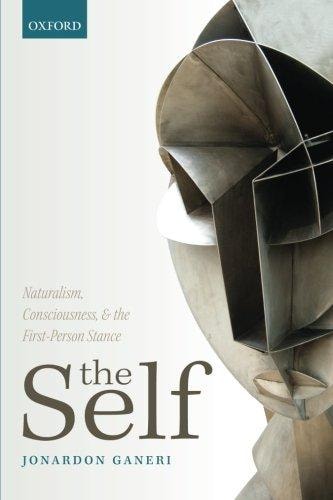
The Self
0
0
As an Amazon Associate and affiliate partner, Menrva Books earns from qualifying purchases. Learn more
Author Description
What is it to occupy a first-person stance? Is the first-personal idea one has of oneself in conflict with the idea of oneself as a physical being? How, if there is a conflict, is it to be resolved? The Self recommends a new way to approach those questions, finding inspiration in theories about consciousness and mind in first millennial India. These philosophers do not regard the first-person stance as in conflict with the natural--their idea of nature is not that of scientific naturalism, but rather a liberal naturalism non-exclusive of the normative.Jonardon Ganeri explores a wide range of ideas about the self: reflexive self-representation, mental files, and quasi-subject analyses of subjective consciousness; the theory of emergence as transformation; embodiment and the idea of a bodily self; the centrality of the emotions to the unity of self. Buddhism's claim that there is no self too readily assumes an account of what a self must be. Ganeri argues instead that the self is a negotiation between self-presentation and normative avowal, a transaction grounded in unconscious mind. Immersion, participation, and coordination are jointly constitutive of self, the first-person stance at once lived, engaged, and underwritten. And all is in harmony with the idea of the natural.
Menrva's Summary
THE THESIS
This work investigates the nature of the first-person stance and whether the subjective experience of selfhood is fundamentally incompatible with a physicalist worldview. Jonardon Ganeri, a scholar of Indian philosophy, utilizes classical Indian theories of mind and consciousness to propose a framework of liberal naturalism. By moving away from the constraints of scientific naturalism, the author argues that the self is not a static entity but a dynamic negotiation between self-presentation and normative avowal.
THE SCOPE MAP
What You Will Find
- Analysis of classical Indian philosophical perspectives on consciousness and the self.
- Examination of the relationship between reflexive self-representation and mental files.
- Exploration of the role of emotions and embodiment in maintaining the unity of the self.
- A critique of Buddhist non-self theories through the lens of normative and unconscious mental processes.
THE AUTHORITY PERSPECTIVE
Scholars and philosophers frequently note the high level of academic rigor and the sophisticated synthesis of classical Indian thought with contemporary analytic philosophy. Experts highlight this text as a significant contribution to the philosophy of mind, particularly for those interested in non-Western approaches to the nature of the subject.
Page Count:
392
Publication Date:
2012-01-01
Publisher:
Oxford University Press
ISBN-10:
0199652368
ISBN-13:
9780199652365
Philosophy
Naturalism
Indian philosophy
Metaphysics
Self Philosophy
Buddhism
Consciousness
Community Tags
Similar Books