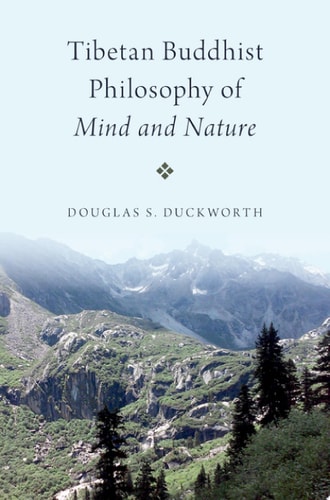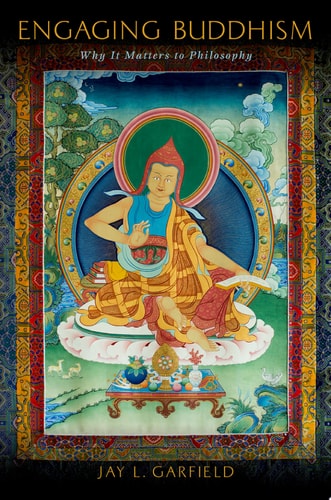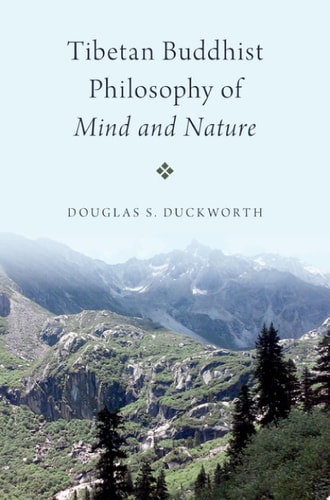
Tibetan Buddhist Philosophy of Mind and Nature
0
0
As an Amazon Associate and affiliate partner, Menrva Books earns from qualifying purchases. Learn more
Author Description
Tibetan Buddhist Philosophy of Mind and Nature offers an engaging philosophical overview of Tibetan Buddhist thought. Integrating competing and complementary perspectives on the nature of mind and reality, Douglas Duckworth reveals the way that Buddhist theory informs Buddhist practice in various Tibetan traditions. Duckworth draws upon a contrast between phenomenology and ontology to highlight distinct starting points of inquiries into mind and nature in Buddhism, and to illuminate central issues confronted in Tibetan Buddhist philosophy. This thematic study engages some of the most difficult and critical topics in Buddhist thought, such as the nature of mind and the meaning of emptiness, across a wide range of philosophical traditions, including the "Middle Way" of Madhyamaka, Yogacara (also known as "Mind-Only"), and tantra. Duckworth provides a richly textured overview that explores the intersecting nature of mind, language, and world depicted in Tibetan Buddhist traditions. Further, this book puts Tibetan philosophy into conversation with texts and traditions from India, Europe, and America, exemplifying the possibility and potential for a transformative conversation in global philosophy.
Menrva's Summary
THE THESIS
This book investigates the core philosophical inquiries into the nature of mind and reality within the diverse traditions of Tibetan Buddhism. Douglas S. Duckworth, a scholar of Buddhist philosophy, utilizes a comparative framework that contrasts phenomenological and ontological approaches to Buddhist thought. By analyzing the intersection of mind, language, and the external world, the author demonstrates how theoretical Buddhist frameworks directly inform contemplative and ritual practices. The text serves to bridge the gap between classical Tibetan discourse and contemporary global philosophical inquiries.
THE SCOPE MAP
What You Will Find
- Comparative analysis of Madhyamaka and Yogacara philosophical schools
- Examination of the concept of emptiness in relation to consciousness
- Integration of Indian, European, and American philosophical perspectives
- Discussion on the relationship between linguistic structures and perceived reality
Scope Limits
- Does not serve as a comprehensive historical survey of all Tibetan Buddhist lineages
- Does not provide a step-by-step manual for specific meditation techniques
THE AUTHORITY PERSPECTIVE
Scholars and students of comparative philosophy frequently note the academic rigor and thematic clarity of the text. Experts highlight this work as a valuable contribution to the field for its ability to place complex Tibetan concepts into a broader, cross-cultural philosophical dialogue.
Page Count:
326
Publication Date:
2018-01-01
Publisher:
Oxford University Press
ISBN-10:
0190883979
ISBN-13:
9780190883973
Religion
Philosophy
Phenomenology
Buddhist Philosophy
Buddhism
Tibet China
Buddhist
Metaphysics