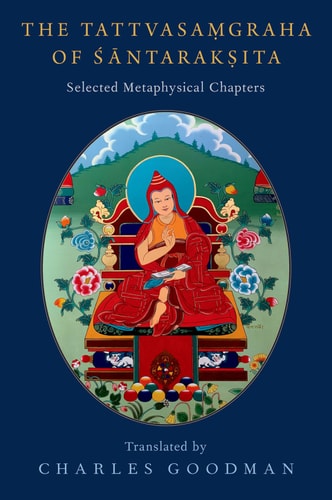
The Tattvasamgraha of Santaraksita: Selected Metaphysical Chapters
0
0
As an Amazon Associate and affiliate partner, Menrva Books earns from qualifying purchases. Learn more
Author Description
The Tattvasamgraha, or Encyclopedia of Metaphysics, is the most influential and frequently studied philosophical text from the late period of Indian Buddhism. Its authors-Santaraksita and his commentator and student, Kamalasila-both played key roles in founding the Tibetan Buddhist tradition. In the Tattvasamgraha, they explain, discuss, and critique a range of views from across the South Asian philosophical and religious spectrum, including ideas drawn from Buddhism, Jainism, and traditions now incorporated into Hinduism. The Tattvasamgraha also includes the earliest discussion of Advaita Vedanta in any Buddhist text.In The Tattvasamgraha of Santaraksita, Charles Goodman translates chapters of the text that deal with fundamental philosophical issues like the existence or nonexistence of God and the soul; the nature of matter and causal relationships; the connection between words and their referents; rules of logic; sources of human knowledge; and the compatibility of beliefs about karma with Buddhism's fundamental claim that there is no self. Goodman's introductory chapters discuss translation choices and explain the arguments and reasoning employed by the Tattvasamgraha's original authors.Together, Goodman's accessible translations and introductory chapters give readers an ideal way to familiarize themselves with the argumentative methods and logical principles of Buddhist epistemology, as well as the intellectual and cultural context of Buddhist philosophy.
Menrva's Summary
THE THESIS
How does the Tattvasamgraha synthesize and critique the diverse metaphysical and epistemological frameworks present in late-period South Asian thought? Charles Goodman provides a scholarly translation and analysis of selected chapters from this foundational Buddhist text. By examining the arguments of Santaraksita and Kamalasila, the book explores how these thinkers navigated the complex intellectual landscape of their time, including debates on the nature of the self, causality, and the validity of knowledge sources.
THE SCOPE MAP
What You Will Find
- Selected chapters focusing on the existence of God, the soul, and causal relationships.
- Analysis of the connection between language and referents.
- Examination of Buddhist epistemology and logical principles.
- Introductory chapters detailing translation methodology and historical context.
Scope Limits
- This volume does not provide a complete translation of the entire Tattvasamgraha.
- The text focuses primarily on metaphysical and epistemological arguments rather than a comprehensive history of the Tibetan Buddhist tradition.
THE AUTHORITY PERSPECTIVE
Scholars and students of Indian philosophy frequently cite this work as a primary entry point for understanding the argumentative rigor of Buddhist epistemology. Readers often note that while the subject matter is dense, the translation remains accessible for those seeking to engage with the foundational logic of the late Indian Buddhist tradition.
Page Count:
640
Publication Date:
2021-01-01
Publisher:
Oxford University Press
ISBN-10:
0190927364
ISBN-13:
9780190927363
Religion
Philosophy
Buddhist
Metaphysics
Indian philosophy
Academic
Buddhism
Epistemology
Community Tags
Similar Books