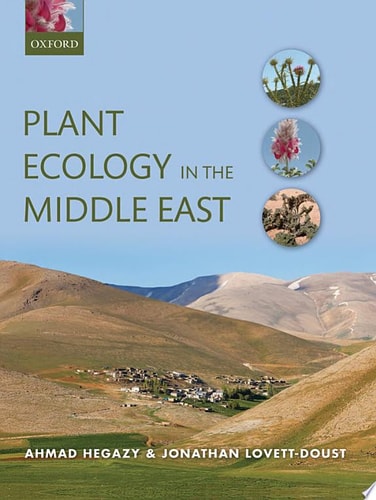
Plant Ecology in the Middle East
0
0
As an Amazon Associate and affiliate partner, Menrva Books earns from qualifying purchases. Learn more
Author Description
This advanced textbook explores the intriguing flora and plant ecology of the Middle East, framed by a changing desert landscape, global climate change, and the arc of human history. This vast region has been largely under-recognized, under-studied, and certainly under-published, due in part to the challenges posed to research by political disputes and human conflict, and a treatise on the subject is now timely. The book integrates Middle Eastern plant geography and its major drivers (geo-tectonics, seed and fruit dispersal, plant functional types, etc.) with the principles of plant ecology. The authors include the many specialized adaptations to desert and dryland ecosystems including succulence, water-conserving photosynthesis, and a remarkable range of other life history strategies. They explore the formation of 'climate relicts', and describe the long history of domestication in the region together with the many reciprocal effects of agriculture on plant ecology. The book concludes by discussing conservation in the region, highlighting five regional biodiversity hotspots where the challenges of desertification, habitat loss, and other threats to plant biodiversity are particularly acute.Plant Ecology in the Middle East is a timely synthesis of the field, setting a new baseline for future research. It will be important reading for both undergraduate and graduate students taking courses in plant ecology, evolution, systematics, biodiversity, and conservation, and will also be of interest and use to a professional audience of botanists, conservation biologists, and practitioners working in dryland ecosystems.
Menrva's Summary
THE THESIS
This text investigates the complex interplay between the unique flora of the Middle East and the environmental, geological, and historical pressures that shape its distribution and survival. The authors, Ahmad Hegazy, Jon Lovett-Doust, and Lesley Lovett-Doust, synthesize decades of research to provide a comprehensive framework for understanding how desertification, climate change, and human agricultural history have influenced plant functional types in this under-studied region. By integrating biogeography with ecological theory, the book establishes a baseline for analyzing the resilience and adaptation strategies of dryland vegetation.
THE SCOPE MAP
What You Will Find
- Analysis of geo-tectonics and seed dispersal mechanisms as primary drivers of plant geography.
- Examination of specialized physiological adaptations including succulence and water-conserving photosynthesis.
- Detailed study of the historical impact of human domestication and agriculture on regional plant ecology.
- Identification of five critical biodiversity hotspots currently facing threats from habitat loss and desertification.
THE AUTHORITY PERSPECTIVE
Experts recognize this work as a foundational text that fills a significant gap in botanical literature regarding Middle Eastern ecosystems. Readers frequently note the academic density of the prose, making it a primary resource for graduate-level students and professional conservation biologists working in arid environments.
Page Count:
352
Publication Date:
2016-03-15
Publisher:
Oxford University Press
ISBN-10:
0199660816
ISBN-13:
9780199660810
Science
Botany
Conservation
Plant ecology
Ecology
Community Tags
Similar Books