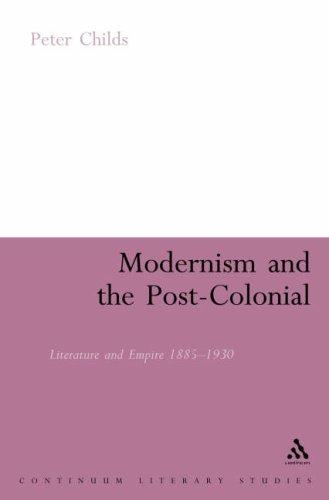
Modernism and the Post-Colonial
0
0
As an Amazon Associate and affiliate partner, Menrva Books earns from qualifying purchases. Learn more
Author Description
This book considers the shifts in aesthetic representation over the period 1885-1930 that coincide both with the rise of literary Modernism and imperialism's high point. If it is no coincidence that the rise of the novel accompanied the expansion of empire in the eighteenth-century, then the historical conditions of fiction as the empire waned are equally pertinent. Peter Childs argues that modernist literary writing should be read in terms of its response and relationship to events overseas and that it should be seen as moving towards an emergent post-colonialism instead of struggling with a residual colonial past. Beginning by offering an analysis of the generational and gender conflict that spans art and empire in the period, Childs moves on to examine modernism's expression of a crisis of belief in relation to subjectivity, space, and time. Finally, he investigates the war as a turning point in both colonial relations and aesthetic experimentation. Each of the core chapters focuses on one key writer and discuss a range of others, including: Conrad, Lawrence, Kipling, Eliot, Woolf, Joyce, Conan Doyle and Haggard.--Bloomsbury Publishing.
Menrva's Summary
THE THESIS
This book investigates the intricate relationship between literary Modernism and the waning of empire, arguing that modernist writing should be understood as a response to overseas events and a precursor to post-colonial thought. Peter Childs, a noted scholar of Modernism, draws upon his extensive knowledge of the period to analyze the aesthetic shifts between 1885 and 1930. He examines how the historical conditions of empire's decline influenced literary expression, proposing that Modernism moved towards an emergent post-colonialism rather than merely grappling with a colonial past. The analysis is structured around key writers and their engagement with themes of generational conflict, crisis of belief, and the impact of war on colonial relations and artistic experimentation.
THE SCOPE MAP
- Analysis of aesthetic representation shifts from 1885-1930, coinciding with Modernism and imperialism's peak.
- Argument that modernist literary writing responded to overseas events and moved towards post-colonialism.
- Examination of generational and gender conflict across art and empire.
- Exploration of Modernism's expression of a crisis of belief concerning subjectivity, space, and time.
- Investigation of World War I as a turning point in colonial relations and aesthetic experimentation.
- Focus on key writers including Conrad, Lawrence, Kipling, Eliot, Woolf, Joyce, Conan Doyle, and Haggard.
THE AUTHORITY PERSPECTIVE
This work is recognized for its scholarly examination of the complex interplay between literary Modernism and the historical context of imperialism's decline. Childs's argument that Modernism contains the seeds of post-colonial thought offers a significant reinterpretation of the period's literary output. The book is valued for its detailed analysis of key authors and its engagement with themes of belief, subjectivity, and the impact of global events on artistic expression.
Page Count:
160
Publication Date:
2007-01-01
ISBN-10:
0826485588
ISBN-13:
9780826485588
Non-Fiction
Fiction
History
Literary History
Modernism
Literary Criticism
Community Tags
Similar Books