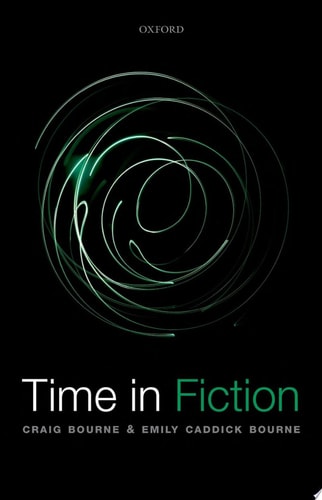
Time in Fiction
0
0
As an Amazon Associate and affiliate partner, Menrva Books earns from qualifying purchases. Learn more
Author Description
What can we learn about the world from engaging with fictional time-series? What should we make of stories involving time travellers who change the past, recurrence of a single day, foreknowledge of the future, the freezing or rewinding of time, or time-series which split into alternative courses of events? Do they show us radical alternative possibilities concerning the nature of time, or do they show that even the impossible can be represented in fiction? Neither, so this book argues. Defending the view that a fiction represents a single possible world, the authors show how apparent representations of radically different time-series can be explained in terms of how worlds are represented without there being any fictional world which has such a time-series. In this way, the book uses the complexities of fictional time to get to the core of the relation between truth in fiction and possibility. It provides a logic and metaphysics to deal with the fact that fictions can leave certain features of their fictional worlds indefinite, and draws comparisons and connections between fictional and scientific representations and hypotheses. Utilising the notion of a counterpart, the authors show how to understand claims concerning persistence of characters and their identity across fictions, and what it means for a fiction to be 'set' at an actual time. Consideration is given to motion in fiction, asking whether it is sometimes continuous and sometimes discrete, how to understand different rates of change, and whether fictional time itself can be said to flow.
Menrva's Summary
THE THESIS
This book investigates the ontological status of time within fictional narratives and the implications these representations have for our understanding of truth, possibility, and the nature of time itself. The authors, Craig Bourne and Emily Caddick Bourne, utilize a rigorous philosophical framework to challenge the assumption that complex fictional time-series necessarily represent radically different possible worlds. By applying logical and metaphysical analysis, they argue that such fictions can be explained through the representation of single possible worlds, thereby clarifying the relationship between fictional content and objective reality.
THE SCOPE MAP
What You Will Find
- A logical framework for analyzing time-travel, temporal loops, and alternative timelines in narrative.
- An application of the counterpart theory to explain character persistence and identity across fictional contexts.
- A comparative analysis between fictional representations and scientific hypotheses regarding temporal flow and change.
- A methodology for addressing indefinite features within fictional worlds and the mechanics of continuous versus discrete motion.
THE AUTHORITY PERSPECTIVE
Experts in the philosophy of literature and metaphysics recognize this work as a significant contribution to the study of fictional ontology. Readers frequently note the academic density of the prose, which requires a strong background in logic and analytic philosophy to fully grasp the authors' arguments.
Page Count:
272
Publication Date:
2016-04-18
Publisher:
Oxford University Press
ISBN-10:
0199675317
ISBN-13:
9780199675319
Philosophy
Metaphysics
Fiction
Time
Logic
Literary theory