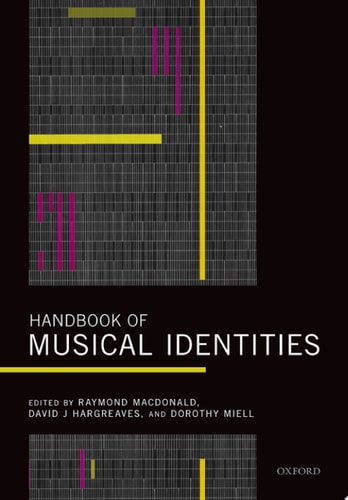
Handbook of Musical Identities
0
0
As an Amazon Associate and affiliate partner, Menrva Books earns from qualifying purchases. Learn more
Author Description
Music is a tremendously powerful channel through which people develop their personal and social identities. Music is used to communicate emotions, thoughts, political statements, social relationships, and physical expressions. But, just as language can mediate the construction and negotiation of developing identities, so music can also be a means of communication through which aspects of people's identities are constructed. Music can have a profound influence on our developing sense of identity, our values, and our beliefs, be it from rock music, classical music, or jazz.Musical identities (MacDonald, Hargreaves and Miell, 2002) was unique in being in being one of the first books to explore this fascinating topic. This new book documents the remarkable expansion and growth in the study of musical identities since the publication of the earlier work. The editors identify three main features of current psychological approaches to musical identities, which concern their definition, development, and the identification of individual differences, as well as four main real-life contexts in which musical identities have been investigated, namely in music and musical institutions; specific geographical communities; education; and in health and well-being. This conceptual framework provides the rationale for the structure of the Handbook.The book is divided into seven main sections. The first, 'Sociological, discursive and narrative approaches', includes several general theoretical accounts of musical identities from this perspective, as well as some more specific investigations. The second and third main sections deal in depth with two of the three psychological topics described above, namely the development of and individual differences in musical identities. The fourth, fifth and sixth main sections pursue three of the real-life contexts identified above, namely 'Musical institutions and practitioners', 'Education', and 'Health and well-being'. The seventh and final main s
Menrva's Summary
THE THESIS
This handbook investigates how music functions as a primary medium for the construction, negotiation, and expression of personal and social identities. The editors, David J. Hargreaves, Dorothy Miell, and Raymond R. MacDonald, synthesize a decade of research following their initial 2002 study to document the expansion of this field. They present a conceptual framework that categorizes current psychological approaches into definitions, developmental stages, and individual differences, while mapping these against real-world applications in institutions, education, and health.
THE SCOPE MAP
What You Will Find
- Theoretical frameworks including sociological, discursive, and narrative approaches to identity formation.
- Analysis of musical identity development across the human lifespan.
- Examination of individual differences in musical engagement and self-perception.
- Case studies focusing on musical institutions, educational settings, and therapeutic health contexts.
THE AUTHORITY PERSPECTIVE
Experts recognize this volume as a comprehensive update to the foundational literature on the psychology of music. Readers frequently note the academic density of the prose, which serves as a primary reference for researchers and students in music psychology and sociology.
Page Count:
864
Publication Date:
2017-04-23
Publisher:
Oxford University Press
ISBN-10:
0199679487
ISBN-13:
9780199679485
Music
Psychology
Health
Humanities
Sociology
Education
Academic
Music therapy
Music
Community Tags
Similar Books





Reader Comments
Share Your Thoughts
No comments yet. Be the first to share your thoughts!