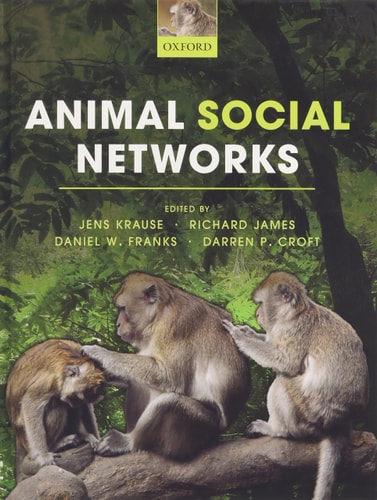
Animal Social Networks
0
0
As an Amazon Associate and affiliate partner, Menrva Books earns from qualifying purchases. Learn more
Author Description
The scientific study of networks - computer, social, and biological - has received an enormous amount of interest in recent years. However, the network approach has been applied to the field of animal behaviour relatively late compared to many other biological disciplines. Understanding social network structure is of great importance for biologists since the structural characteristics of any network will affect its constituent members and influence a range of diverse behaviours. These include finding and choosing a sexual partner, developing and maintaining cooperative relationships, and engaging in foraging and anti-predator behavior.This novel text provides an overview of the insights that network analysis has provided into major biological processes, and how it has enhanced our understanding of the social organisation of several important taxonomic groups. It brings together researchers from a wide range of disciplines with the aim of providing both an overview of the power of the network approach for understanding patterns and process in animal populations, as well as outlining how current methodological constraints and challenges can be overcome.Animal Social Networks is principally aimed at graduate level students and researchers in the fields of ecology, zoology, animal behaviour, and evolutionary biology but will also be of interest to social scientists.
Menrva's Summary
THE THESIS
This text investigates how the application of network analysis provides a quantitative framework for understanding the complex social structures and behavioral patterns within animal populations. The authors, a team of experts in ecology and animal behavior, synthesize current research to demonstrate how social network metrics can explain individual fitness, cooperative strategies, and group-level dynamics. By bridging the gap between theoretical network science and field biology, the book establishes a methodology for analyzing how social architecture influences biological processes across diverse taxonomic groups.
THE SCOPE MAP
What You Will Find
- Quantitative methodologies for mapping social interactions in wild and captive animal populations.
- Analysis of how network structure impacts foraging, anti-predator behavior, and mate selection.
- Comparative studies across various taxonomic groups including mammals, birds, and fish.
- Discussion of current methodological limitations and future directions for network-based behavioral research.
THE AUTHORITY PERSPECTIVE
Experts identify this work as a foundational text for graduate students and researchers seeking to integrate network theory into behavioral ecology. Readers frequently note the technical density of the prose, which effectively bridges the gap between abstract mathematical concepts and practical biological application.
Page Count:
288
Publication Date:
2015-02-18
Publisher:
Oxford University Press
ISBN-10:
0199679045
ISBN-13:
9780199679041
Science
Ecology
Zoology
Network Science
Biology
Social Behavior