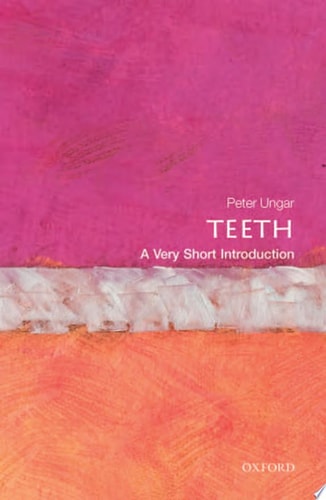
Teeth: A Very Short Introduction
0
0
As an Amazon Associate and affiliate partner, Menrva Books earns from qualifying purchases. Learn more
Author Description
Teeth are amazing -- the product of half a billion years of evolution. They provide fuel for the body by breaking apart other living things; and they must do it again and again over a lifetime without breaking in the process. This means that plants and animals have developed tough or hard tissues for protection, and teeth have evolved ways to sharpen or strengthen themselves to overcome those defenses. And just as different jobs require different tools, animals with different diets have different shaped teeth to deal with the variety of foods that they eat.In this Very Short Introduction, Peter S. Ungar, an award-winning author and leading scientist, presents the story of teeth. Ungar outlines the key concepts, including insight into the origin of teeth and their evolution. Considering why teeth are important, he describes how they are made, and how they work, including their fundamental importance in the fossil record. Ungar finishes with a review of mammal teeth, looking at how they evolved and how recent changes to our diet are now affecting dental health.
Menrva's Summary
THE THESIS
How have teeth evolved over half a billion years to become the specialized tools necessary for the survival of diverse species? Peter S. Ungar, a distinguished scientist and expert in dental evolution, synthesizes biological data and the fossil record to explain the structural mechanics of teeth. He argues that teeth are not merely static features but dynamic evolutionary responses to dietary pressures and environmental challenges. The text provides a framework for understanding how dental morphology reflects the history of life on Earth and the current state of human dental health.
THE SCOPE MAP
What You Will Find
- Evolutionary history of dental tissues spanning 500 million years
- Analysis of the relationship between diet, tooth shape, and mechanical function
- Examination of the role of teeth in the fossil record for biological classification
- Discussion on the impact of modern dietary shifts on contemporary dental health
THE AUTHORITY PERSPECTIVE
Experts recognize this volume as a concise, high-level synthesis of dental biology suitable for both students and curious laypeople. Readers frequently note the clarity of the prose, which effectively distills complex evolutionary concepts into an accessible format.
Page Count:
152
Publication Date:
2014-04-01
Publisher:
Oxford University Press
ISBN-10:
0199670595
ISBN-13:
9780199670598
Science
Evolution
Anthropology
Biology
Physical Anthropology
Teeth
Paleontology
Dentistry