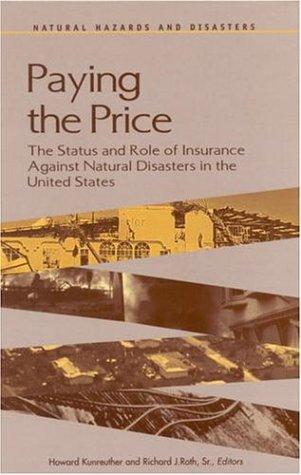
Paying the Price
0
0
As an Amazon Associate and affiliate partner, Menrva Books earns from qualifying purchases. Learn more
Author Description
This book considers the effectiveness of insurance coverage for low-probability, high-consequence events such as natural disasters - and how insurance programs can successfully be used with other policy tools, such as building codes and standards, to encourage effective loss reduction measures. The authors discuss the reasons for the dramatic increase in insured losses from natural disasters since 1989 and the concern that insurers have about their ability to provide coverage against similar events in the future.
Menrva's Summary
THE THESIS
This book investigates the challenges and effectiveness of insuring against low-probability, high-consequence events like natural disasters. It examines why insured losses from such events have escalated dramatically since 1989 and addresses insurers' concerns about future coverage capabilities. The authors explore how insurance programs can be integrated with policy tools, such as building codes and standards, to promote robust loss reduction strategies.
THE SCOPE MAP
- Analysis of the increasing trend in insured losses from natural disasters since 1989.
- Discussion of insurers' concerns regarding their capacity to cover future catastrophic events.
- Exploration of the synergy between insurance coverage and policy tools like building codes.
- Examination of how insurance can incentivize the adoption of effective loss reduction measures.
- Consideration of the economic and policy implications of insuring against low-probability, high-consequence risks.
THE AUTHORITY PERSPECTIVE
The book addresses the critical issue of insuring against rare but devastating events, a topic of growing importance given the observed increase in disaster-related losses. It likely provides a detailed economic and policy analysis, drawing on data to support its arguments about the effectiveness of insurance and complementary measures. The work appears to be aimed at policymakers, insurance professionals, and academics interested in risk management and disaster mitigation.
Page Count:
300
Publication Date:
1998-01-01
ISBN-10:
0309063612
Business
Non-Fiction
Nature
Economics
Insurance
Community Tags
Similar Books