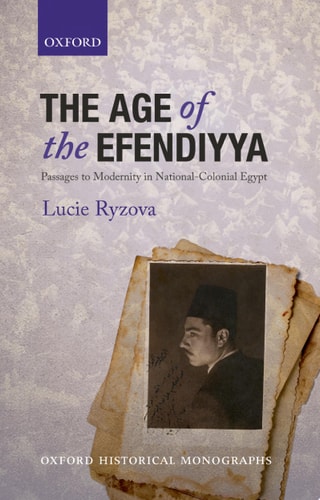
The Age of the Efendiyya: Passages to Modernity in National-Colonial Egypt
0
0
As an Amazon Associate and affiliate partner, Menrva Books earns from qualifying purchases. Learn more
Author Description
In colonial-era Egypt, a new social category of "modern men" emerged, the efendiyya. Working as bureaucrats, teachers, journalists, free professionals, and public intellectuals, the efendiyya represented the new middle class elite. They were the experts who drafted and carried out the state's modernisation policies, and the makers as well as majority consumers of modern forms of politics and national culture. As simultaneously "authentic" and "modern", they assumed a key political role in the anti-colonial movement and in the building of a modern state both before and after the revolution of 1952.Lucie Ryzova explores where these self-consciously modern men came from, and how they came to be such major figures, by examining multiple social, cultural, and institutional contexts. These contexts include the social strategies pursued by "traditional" households responding to new opportunities for social mobility; modern schools as vehicles for new forms of knowledge dissemination, which had the potential to redefine social authority; but also include new forms of youth culture, student rituals, peer networks, and urban popular culture. The most common modes of self-expression among the effendiyya were through politics and writing (either literature or autobiography). This articulated an efendi culture imbued with a sense of mission, duty, and entitlement, and defined the ways in which their social experiences played into the making of modern Egyptian culture and politics.
Menrva's Summary
THE THESIS
How did the emergence of the efendiyya class redefine social authority and political identity in colonial and post-colonial Egypt? Lucie Ryzova, a scholar of modern Egyptian history, investigates the rise of this new middle-class elite through a multi-dimensional analysis of institutional, cultural, and social shifts. By examining the intersection of state modernization policies and individual social mobility, the author argues that the efendiyya were the primary architects of modern Egyptian national culture. The text utilizes a framework that bridges the gap between traditional household structures and the burgeoning urban intellectual life of the early twentieth century.
THE SCOPE MAP
What You Will Find
- Analysis of the social strategies employed by traditional households to achieve upward mobility.
- Examination of modern educational institutions as sites for the dissemination of new knowledge and authority.
- Exploration of urban popular culture, student rituals, and peer networks as markers of identity.
- Investigation into the role of political activism and autobiographical writing in shaping the efendi consciousness.
THE AUTHORITY PERSPECTIVE
Scholars of Middle Eastern history recognize this work as a significant contribution to the study of social stratification and the formation of the Egyptian middle class. Readers frequently note the academic density of the prose, which provides a rigorous examination of the institutional and cultural forces that defined the efendiyya.
Page Count:
304
Publication Date:
2014-02-05
Publisher:
Oxford University Press
ISBN-10:
0199681775
ISBN-13:
9780199681778
History
Sociology
Egypt
Middle class
National liberation movements
Social History
Egypt - History
Colonialism
African history
Community Tags
Similar Books