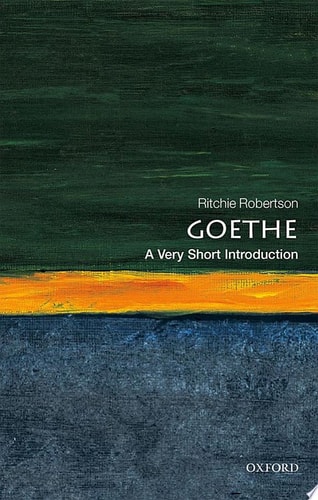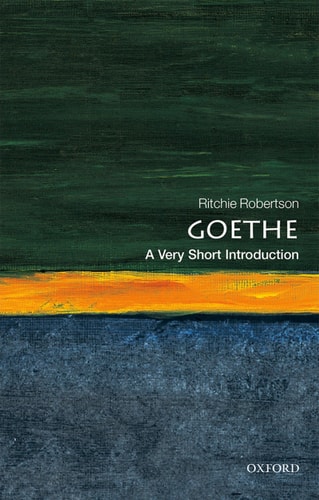
Goethe: A Very Short Introduction
0
0
As an Amazon Associate and affiliate partner, Menrva Books earns from qualifying purchases. Learn more
Author Description
In 1878 the Victorian critic Matthew Arnold wrote: 'Goethe is the greatest poet of modern times... because having a very considerable gift for poetry, he was at the same time, in the width, depth, and richness of his criticism of life, by far our greatest modern man.'In this Very Short Introduction Ritchie Robertson covers the life and work of Johann Wolfgang von Goethe (1749-1832): scientist, administrator, artist, art critic and supreme literary writer in a vast variety of genres. Looking at Goethe's poetry, novels and drama pieces, as well as his travel writing, autobiography, and essays on art and aesthetics, Robertson analyses some of the key themes in his works: love, nature, religion and tragedy. Dispelling the misconception of Goethe as a sedate Victorian sage, Robertson shows how much of his art was rooted in turbulent personal conflicts, and draws on recent research to present a complete portrait of the scientific work and political activity which accompanied Goethe's writings.ABOUT THE SERIES: The Very Short Introductions series from Oxford University Press contains hundreds of titles in almost every subject area. These pocket-sized books are the perfect way to get ahead in a new subject quickly. Our expert authors combine facts, analysis, perspective, new ideas, and enthusiasm to make interesting and challenging topics highly readable.
Menrva's Summary
THE THESIS
This book investigates the multifaceted life and intellectual output of Johann Wolfgang von Goethe to determine how his diverse roles as a scientist, administrator, and writer shaped his enduring influence on modern thought. Ritchie Robertson, a scholar of German literature, utilizes a biographical framework to synthesize Goethe's extensive body of work, including his poetry, novels, and scientific treatises. By examining the tension between Goethe's personal conflicts and his public persona, the author argues that the writer was a dynamic, turbulent figure rather than the static sage often depicted in Victorian criticism.
THE SCOPE MAP
What You Will Find
- A comprehensive overview of Goethe's career across literature, science, and political administration.
- Analysis of recurring thematic elements including nature, tragedy, religion, and human love.
- Integration of contemporary research regarding Goethe's scientific contributions and administrative duties.
- Contextualization of Goethe's work within the broader landscape of European aesthetic and intellectual history.
THE AUTHORITY PERSPECTIVE
This text is recognized as a concise, high-level entry point for students and general readers seeking to understand the breadth of Goethe's contributions. Experts note that the prose remains accessible while successfully condensing complex literary and scientific history into a manageable format.
Page Count:
144
Publication Date:
2016-01-01
Publisher:
Oxford University Press, USA 2016-04-01
ISBN-10:
0199689253
ISBN-13:
9780199689255
Biography
Philosophy
History
Literary Criticism
European
Community Tags
Other Editions(3)
Similar Books