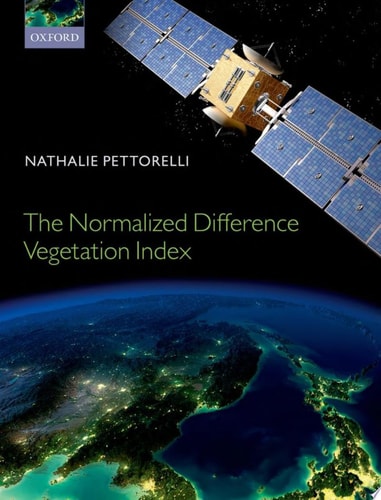
The Normalized Difference Vegetation Index
0
0
As an Amazon Associate and affiliate partner, Menrva Books earns from qualifying purchases. Learn more
Author Description
There has been a recent surge of interest in remote sensing and its use in ecology and conservation but this is the first book to focus explicitly on the NDVI (Normalised Difference Vegetation Index), a simple numerical indicator and powerful tool that can be used to assess spatio-temporal changes in green vegetation. The NDVI opens the possibility of addressing questions on scales inaccessible to ground-based methods alone; it is mostly freely available with global coverage over several decades.This novel text provides an authoritative overview of the principles and possible applications of the NDVI in ecology, environmental and wildlife management, and conservation. NDVI data can provide valuable information about temporal and spatial changes in vegetation distribution, productivity, and dynamics; allowing monitoring of habitat degradation and fragmentation, or assessment of the ecological effects of climatic disasters such as drought or fire. The NDVI has also provided ecologists with a promising way to couple vegetation with animal distribution, abundance, movement, survival and reproductive parameters. Over the last few decades, numerous studies have highlighted the potential key role of satellite data and the NDVI in macroecology, plant ecology, animal population dynamics, environmental monitoring, habitat selection and habitat use studies, and paleoecology. The chapters are organised around two sections: the first detailing vegetation indices and the NDVI, the principles behind the NDVI, its correlation with climate, the available NDVI datasets, and the possible complications and errors associated with the use of this satellite-based vegetation index. The second section discusses the possible applications of the NDVI in ecology, environmental and wildlife management, and conservation.This practical handbook is suitable for terrestrial ecologists and conservation biologists working with remote sensing tools. It will also be of relevance and use to both graduat
Menrva's Summary
THE THESIS
This book investigates the utility and application of the Normalized Difference Vegetation Index (NDVI) as a primary metric for assessing spatio-temporal changes in global vegetation. Nathalie Pettorelli, a researcher in the field of ecology and conservation, synthesizes decades of satellite data to provide a framework for using NDVI in environmental monitoring. The text argues that NDVI serves as a critical bridge between remote sensing technology and ecological research, enabling the study of vegetation dynamics at scales previously inaccessible to ground-based observation.
THE SCOPE MAP
What You Will Find
- Principles of vegetation indices and the mathematical foundations of NDVI
- Analysis of NDVI datasets and common technical errors in satellite-based monitoring
- Correlation studies between NDVI metrics and climatic variables
- Practical applications for habitat management, wildlife population dynamics, and conservation planning
THE AUTHORITY PERSPECTIVE
Experts identify this work as a foundational handbook for terrestrial ecologists and conservation biologists integrating remote sensing into their research. Readers frequently note the technical clarity of the text, which serves as a bridge for graduate students and professionals entering the field of macroecology.
Page Count:
224
Publication Date:
2014-02-01
Publisher:
Oxford University Press
ISBN-10:
0199693161
ISBN-13:
9780199693160
Science
Ecology
Biology
Remote sensing
Conservation
Plants
Plant ecology
Community Tags
Other Editions(4)



Similar Books







Reader Comments
Share Your Thoughts
No comments yet. Be the first to share your thoughts!