Death and Dying in the Neolithic Near East
0
0
As an Amazon Associate and affiliate partner, Menrva Books earns from qualifying purchases. Learn more
Author Description
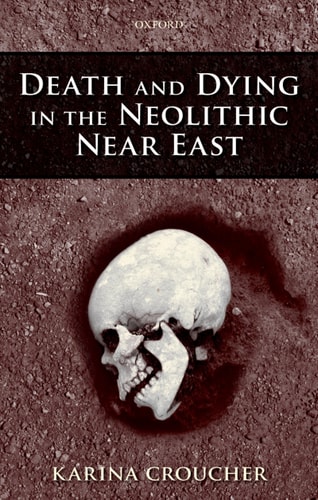
The Neolithic of the Near East is a period of human development which saw fundamental changes in the nature of human society. It is traditionally studied for its development of domestication, agriculture, and growing social complexity. In this book Karina Croucher takes a new approach, focusing on the human body and investigating mortuary practices - the treatment and burial of the dead - to discover what these can reveal about the people of the Neolithic Near East.The remarkable evidence relating to mortuary practices and ritual behaviour from the Near Eastern Neolithic provides some of the most breath-taking archaeological evidence excavated from Neolithic contexts. The most enigmatic mortuary practices of the period produced the striking 'plastered skulls', faces modelled onto the crania of the deceased. Archaeological sites also contain evidence for many intriguing mortuary treatments, including decapitated burials and the fragmentation, circulation, curation, and reburial of human and animal remains and material culture.Drawing on recent excavations and earlier archive and published fieldwork, Croucher provides an overview and introduction to the period, presenting new interpretations of the archaeological evidence and in-depth analyses of case studies. The book explores themes such as ancestors, human-animal relationships, food, consumption and cannibalism, personhood, and gender.Offering a unique insight into changing attitudes towards the human body - both in life and during death - this book reveals the identities and experiences of the people of the Neolithic Near East through their interactions with their dead, with animals, and their new material worlds.
Menrva's Summary
THE THESIS
How do mortuary practices and the treatment of the human body in the Neolithic Near East reflect the shifting social structures, identities, and belief systems of early agricultural societies? Karina Croucher, an expert in archaeological theory and the Neolithic period, synthesizes recent excavations with archival data to challenge traditional interpretations of this era. By moving beyond the standard focus on agriculture and domestication, she argues that the treatment of the dead provides a primary lens for understanding personhood, gender roles, and human-animal relationships during this transformative epoch.
THE SCOPE MAP
What You Will Find
- Analysis of enigmatic mortuary rituals including plastered skulls and decapitated burials.
- Examination of the fragmentation, curation, and circulation of human and animal remains.
- Case studies exploring themes of ancestry, consumption, cannibalism, and social identity.
- A theoretical framework for interpreting material culture and its connection to the living body.
THE AUTHORITY PERSPECTIVE
Experts recognize this work as a significant contribution to the study of Neolithic social complexity, particularly for its focus on the body as a site of cultural meaning. Readers frequently note the academic rigor of the text, which serves as a valuable resource for students and professionals interested in the intersection of archaeology and social anthropology.
Page Count:
394
Publication Date:
2012-09-07
Publisher:
Oxford University Press
ISBN-10:
0199693951
ISBN-13:
9780199693955
History
Death Studies
Anthropology
Middle East
Neolithic
Thanatology
Near East
Funeral Rites
Archaeology