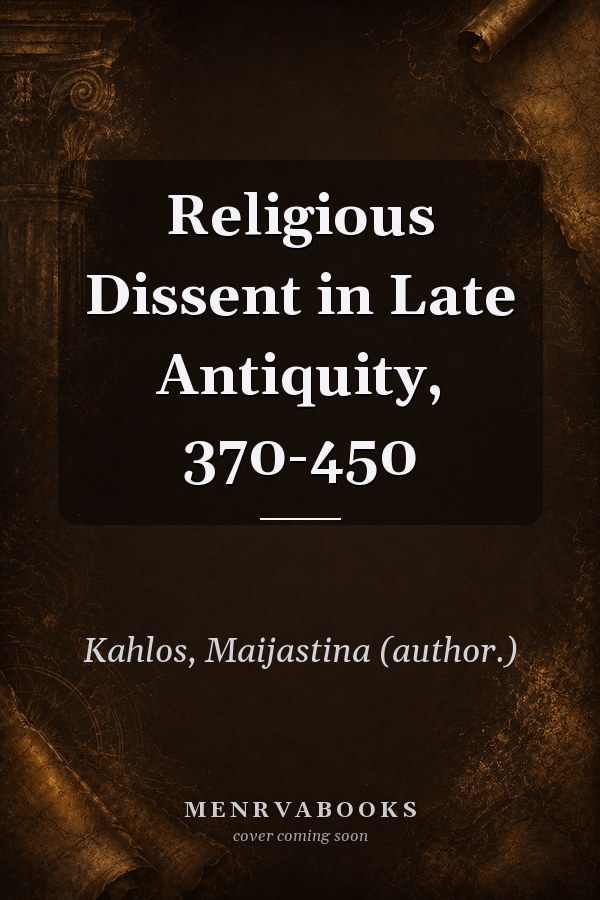
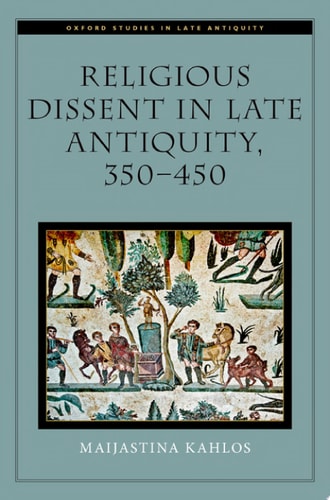
Religious Dissent in Late Antiquity, 370-450
0
0
As an Amazon Associate and affiliate partner, Menrva Books earns from qualifying purchases. Learn more
Author Description
Religious Dissent In Late Antiquity Reconsiders The Religious History Of The Late Roman Empire, Focusing On The Shifting Position Of Dissenting Religious Groups - Conventionally Called 'pagans' And 'heretics'. The Period From The Mid-fourth Century Until The Mid-fifth Century Ce Witnessed A Significant Transformation Of Late Roman Society And A Gradual Shift From The World Of Polytheistic Religions Into The Christian Empire. Religious Dissent In Late Antiquity Reconsiders The Religious History Of The Late Roman Empire, Focusing On The Shifting Position Of Dissenting Religious Groups - Conventionally Called 'pagans' And 'heretics'. The Period From The Mid-fourth Century Until The Mid-fifth Century Ce Witnessed A Significant Transformation Of Late Roman Society And A Gradual Shift From The World Of Polytheistic Religions Into The Christian Empire. Religious Dissent In Late Antiquity Addresses Two Aspects: Rhetoric And Realities, And Consequently, Delves Into The Interplay Between The Manifest Ideologies And Daily Life Found In Late Antique Sources. It Is A Detailed Analysis Of Selected Themes And A Close Reading Of Selected Texts, Tracing Key Elements And Developments In The Treatment Of Dissident Religious Groups. The Book Focuses On Specific Themes, Such As The Limits Of Imperial Legislation And Ecclesiastical Control, The End Of Sacrifices, And The Label Of Magic. Religious Dissent In Late Antiquity Examines The Ways In Which Dissident Religious Groups Were Construed As Religious Outsiders, But Also Explores Local Rituals And Beliefs In Late Roman Society As Creative Applications And Expressions Of The Infinite Range Of Human Inventiveness.-- Imperial And Ecclesiastical Authority. The Emperor And The Dissenters; The Realities Of Legislation; The Bishops And The Dissenters; The Local Limits Of Imperial And Ecclesiastical Power; Authority And Aggression -- People In Rhetoric And Realities. Individuals, Groups, And Plural Possibilities In Late Antiquity; Otherness Outside: Making Pagans; Deviance Or Otherness Inside: Construing Heretics; Reactions -- Time, Place, Practices. The Transformation Of Practices; Economics Of Practices; Sacred Places And Spaces; Sacred Times And Spaces; Rhetoric And Realities Of Magic; Conclusion: The Darkening Age Or The Victory Of John Doe? Maijastina Kahlos. Includes Bibliographical References (pages 221-259) And Indexes.
Menrva's Summary
THE THESIS
This work investigates how the Roman Empire transitioned from a polytheistic society to a Christian state by examining the shifting status of religious groups labeled as pagans or heretics between 370 and 450 CE. Maijastina Kahlos utilizes a combination of imperial legislation, ecclesiastical records, and contemporary literary sources to analyze the gap between official rhetoric and the lived realities of religious minorities. The author argues that the marginalization of these groups was not a uniform process but a complex negotiation of power, local ritual, and social identity.
THE SCOPE MAP
What You Will Find
- Analysis of imperial legislation regarding religious practice
- Examination of ecclesiastical control and episcopal authority
- Discussion of the prohibition of sacrifices and the criminalization of magic
- Case studies on the construction of religious otherness
Scope Limits
- The study is geographically and chronologically restricted to the late Roman Empire between 370 and 450 CE
- It does not provide a comprehensive history of all religious movements in the Mediterranean basin
THE AUTHORITY PERSPECTIVE
Scholars in the field of Late Antiquity recognize this text as a nuanced contribution to the study of religious intolerance and social transformation. Readers frequently note the academic density of the prose and the author's rigorous reliance on primary source analysis.
Page Count:
0
Publication Date:
2019-01-01
Publisher:
Oxford University Press,
ISBN-10:
0190067284
ISBN-13:
9780190067281
Religion
History
Dissens
Église
Paganism
Church History
Late Antiquity
Paganisme
Roman Empire
Community Tags
Similar Books


Reader Comments
Share Your Thoughts
No comments yet. Be the first to share your thoughts!