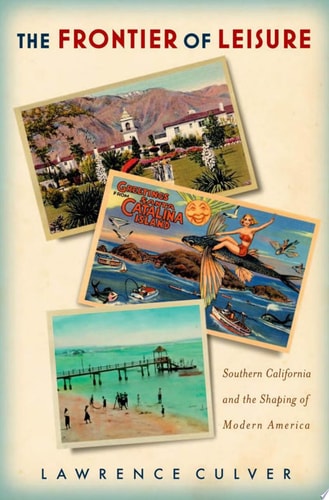
The Frontier of Leisure
0
0
As an Amazon Associate and affiliate partner, Menrva Books earns from qualifying purchases. Learn more
Author Description
Southern California has long been promoted as the playground of the world, the home of resort-style living, backyard swimming pools, and year-round suntans. Tracing the history of Southern California from the late nineteenth century through the late twentieth century, The Frontier of Leisure reveals how this region did much more than just create lavish resorts like Santa Catalina Island and Palm Springs--it literally remade American attitudes towards leisure. Lawrence Culver shows how this culture of leisure gradually took hold with an increasingly broad group of Americans, and ultimately manifested itself in suburban developments throughout the Sunbelt and across the United States. He further shows that as Southern Californians promoted resort-style living, they also encouraged people to turn inward, away from public spaces and toward their private homes and communities. Impressively researched, a fascinating and lively read, this finely nuanced history connects Southern Californian recreation and leisure to larger historical themes, including regional development, architecture and urban planning, race relations, Indian policy, politics, suburbanization, and changing perceptions of nature.
Menrva's Summary
THE THESIS
How did Southern California transform from a regional destination into the primary architect of modern American leisure culture? Lawrence Culver, a historian specializing in the American West, examines the evolution of the region from the late nineteenth century through the late twentieth century. He argues that the promotion of resort-style living in Southern California fundamentally altered national attitudes toward recreation, shifting the focus from public engagement to private, suburban domesticity. By analyzing urban development, architecture, and social policy, Culver demonstrates how this regional shift became a national standard.
THE SCOPE MAP
What You Will Find
- Historical analysis of Southern California development from the 1890s to the 1990s.
- Examination of the transition from public recreation spaces to private, home-centered leisure.
- Integration of diverse themes including race relations, Indian policy, and urban planning.
- Case studies of iconic resort locations like Santa Catalina Island and Palm Springs.
THE AUTHORITY PERSPECTIVE
Scholars and historians frequently cite this work as a significant contribution to the study of the American Sunbelt and the cultural history of the West. Readers often note the academic rigor of the text, which effectively bridges the gap between architectural history and broader social trends.
Page Count:
336
Publication Date:
2010-01-01
Publisher:
Oxford University Press
ISBN-10:
0199700036
ISBN-13:
9780199700035
History
Sociology
California history
urban planning
Community Tags
Similar Books