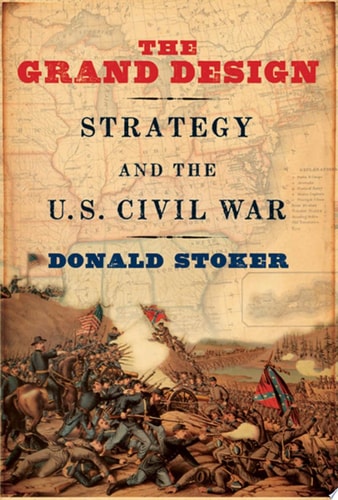
The Grand Design
0
0
As an Amazon Associate and affiliate partner, Menrva Books earns from qualifying purchases. Learn more
Author Description
Despite The Abundance Of Books On The Civil War, Not One Has Focused Exclusively On What Was In Fact The Determining Factor In The Outcome Of The Conflict: Differences In Union And Southern Strategy. In The Grand Design, Donald Stoker Provides For The First Time A Comprehensive And Often Surprising Account Of Strategy As It Evolved Between Fort Sumter And Appomattox. Reminding Us That Strategy Is Different From Tactics (battlefield Deployments) And Operations (campaigns Conducted In Pursuit Of A Strategy), Stoker Examines How Abraham Lincoln And Jefferson Davis Identified Their Political Goals And Worked With Their Generals To Craft The Military Means To Achieve Them--or How They Often Failed To Do So. Stoker Shows That Davis, Despite A West Point Education And Experience As Secretary Of War, Ultimately Failed As A Strategist By Losing Control Of The Political Side Of The War. Lincoln, In Contrast, Evolved A Clear Strategic Vision, But He Failed For Years To Make His Generals Implement It. And While Robert E. Lee Was Unerring In His Ability To Determine The Union's Strategic Heart--its Center Of Gravity--he Proved Mistaken In His Assessment Of How To Destroy It. Historians Have Often Argued That The North's Advantages In Population And Industry Ensured Certain Victory. In The Grand Design, Stoker Reasserts The Centrality Of The Overarching Plan On Each Side, Arguing Convincingly That It Was Strategy That Determined The Result Of America's Great National Conflict.
Menrva's Summary
THE THESIS
The Grand Design investigates how the divergent strategic planning of the Union and the Confederacy served as the primary determinant for the outcome of the American Civil War. Donald J. Stoker, a historian specializing in military conflict, utilizes primary source documents and correspondence between political leaders and their generals to analyze the evolution of war aims. He argues that victory was not merely a product of industrial or demographic superiority, but rather the result of how effectively Abraham Lincoln and Jefferson Davis translated political objectives into coherent military action. The text contrasts the strategic development of both administrations, highlighting the failures and successes in command coordination throughout the conflict.
THE SCOPE MAP
What You Will Find
- A comparative analysis of Union and Confederate strategic decision-making from 1861 to 1865.
- A clear distinction between the definitions of strategy, operations, and tactics within a 19th-century context.
- Evaluations of the leadership styles of Abraham Lincoln and Jefferson Davis regarding their military oversight.
- Critical assessments of key military figures, including Robert E. Lee, and their alignment with national political goals.
THE AUTHORITY PERSPECTIVE
Historians and military scholars frequently cite this work for its rigorous focus on the mechanics of strategic planning rather than battlefield minutiae. The text is recognized as a significant contribution to Civil War historiography for its clear articulation of the political-military divide during the conflict.
Page Count:
512
Publication Date:
2010-01-01
Publisher:
Oxford University Press
ISBN-10:
0199706603
ISBN-13:
9780199706600
History
Political History
Military History
Civil War
Strategy
Community Tags
Similar Books