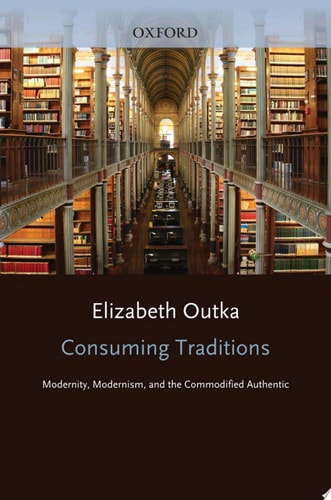
Consuming Traditions: Modernity, Modernism, and the Commodified Authentic
0
0
As an Amazon Associate and affiliate partner, Menrva Books earns from qualifying purchases. Learn more
Author Description
In an unprecedented phenomenon that swept across Britain at the turn of the nineteenth century, writers, advertisers, and architects began to create and sell images of an authentic cultural realm paradoxically considered outside the marketplace. Such images were located in nostalgic pictures of an idyllic, pre-industrial past, in supposedly original objects not derived from previous traditions, and in the ideal of a purified aesthetic that might be separated from the mass market. Presenting a lively, unique study of what she terms the "commodified authentic," Elizabeth Outka explores this crucial but overlooked development in the history of modernity with a piercing look at consumer culture and the marketing of authenticity in late nineteenth- and early twentieth-century Britain. The book brings together a wide range of cultural sources, from the model towns of Bournville, Port Sunlight, and Letchworth; to the architecture of Edwin Lutyens and Selfridges department store; to work by authors such as Bernard Shaw, E. M. Forster, Henry James, D. H. Lawrence, James Joyce, and Virginia Woolf.
Menrva's Summary
THE THESIS
This book investigates the paradoxical emergence of the 'commodified authentic' in Britain at the turn of the nineteenth century, where the marketplace began to manufacture and sell images of a pre-industrial, non-commercial past. Elizabeth Outka, an expert in modernism and cultural history, analyzes how writers, architects, and advertisers constructed these nostalgic ideals to navigate the anxieties of rapid industrialization. By examining the intersection of aesthetic purity and mass consumption, the author argues that the desire for authenticity became a central, yet contradictory, engine of modern consumer culture.
THE SCOPE MAP
What You Will Find
- Analysis of British cultural shifts during the late nineteenth and early twentieth centuries.
- Examination of model towns including Bournville, Port Sunlight, and Letchworth.
- Architectural critique of Edwin Lutyens and the commercial design of Selfridges.
- Literary analysis of works by Bernard Shaw, E. M. Forster, Henry James, D. H. Lawrence, James Joyce, and Virginia Woolf.
THE AUTHORITY PERSPECTIVE
Scholars and critics recognize this work as a significant contribution to the study of modernism and the history of consumerism. Readers frequently note the depth of the interdisciplinary research, which effectively bridges the gap between architectural history and literary analysis.
Page Count:
232
Publication Date:
2008-01-01
Publisher:
Oxford University Press
ISBN-10:
0199706875
ISBN-13:
9780199706877
Politics
History
British & Irish
Kindle eBooks
Modernism
Consumption Economics
Literary Criticism
British History
Categories
Great Britain
Kindle Store
In literature
Community Tags
Similar Books