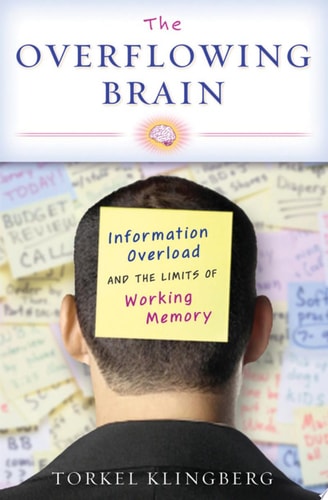
The Overflowing Brain: Information Overload and the Limits of Working Memory
0
0
As an Amazon Associate and affiliate partner, Menrva Books earns from qualifying purchases. Learn more
Author Description
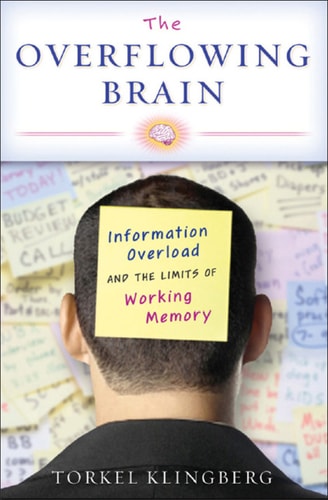
As The Pace Of Technological Change Accelerates, We Are Increasingly Experiencing A State Of Information Overload. Statistics Show That We Are Interrupted Every Three Minutes During The Course Of The Work Day. Multitasking Between Email, Cell-phone, Text Messages, And Four Or Five Websites While Listening To An Ipod Forces The Brain To Process More And More Informaton At Greater And Greater Speeds. And Yet The Human Brain Has Hardly Changed In The Last 40,000 Years. Are All These High-tech Advances Overtaxing Our Stone Age Brains Or Is The Constant Flood Of Information Good For Us, Giving Our Brains The Daily Exercise They Seem To Crave? In The Overflowing Brain, Cognitive Scientist Torkel Klingberg Takes Us On A Journey Into The Limits And Possibilities Of The Brain. He Suggests That We Should Acknowledge And Embrace Our Desire For Information And Mental Challenges, But Try To Find A Balance Between Demand And Capacity. Klingberg Explores The Cognitive Demands, Or Complexity, Of Everyday Life And How The Brain Tries To Meet Them. He Identifies Different Types Of Attention, Such As Stimulus-driven And Controlled Attention, But Focuses Chiefly On Working Memory, Our Capacity To Keep Information In Mind For Short Periods Of Time. Dr Klingberg Asserts That Working Memory Capacity, Long Thought To Be Static And Hardwired In The Brain, Can Be Improved By Training, And That The Increasing Demands On Working Memory May Actually Have A Constructive Effect: As Demands On The Human Brain Increase, So Does Its Capacity. The Book Ends With A Discussion Of The Future Of Brain Development And How We Can Best Handle Information Overload In Our Everyday Lives. Klingberg Suggests How We Might Find A Balance Between Demand And Capacity And Move From Feeling Overwhelmed To Deeply Engaged.
Menrva's Summary
THE THESIS
Does the modern deluge of digital information exceed the biological capacity of the human brain, or does it serve as a catalyst for cognitive expansion? Cognitive scientist Torkel Klingberg examines the intersection of evolutionary biology and contemporary technological demands. By analyzing the mechanics of working memory, he argues that while our brains are constrained by ancient architecture, they possess a latent plasticity that allows for adaptation and improvement through targeted mental challenges.
THE SCOPE MAP
What You Will Find
- Analysis of working memory capacity and its role in processing complex information.
- Distinction between stimulus-driven attention and controlled, goal-oriented attention.
- Scientific evidence regarding the potential for cognitive training to expand mental capacity.
- Strategies for balancing high-demand digital environments with biological limitations.
THE AUTHORITY PERSPECTIVE
Experts in cognitive science recognize this work as a significant contribution to the discussion on neuroplasticity and modern information management. Readers frequently note the accessible synthesis of complex neurological data, making it a useful resource for those seeking to understand the impact of technology on mental performance.
Page Count:
224
Publication Date:
2009-01-01
Publisher:
Ebsco Publishing
ISBN-10:
0199706727
ISBN-13:
9780199706723
Psychology
Neuroplasticity
Neuroscience
Information Processing
Attention
Productivity
Self Help
Technology
Memory
Community Tags
Other Editions(3)
Similar Books








Reader Comments
Share Your Thoughts
No comments yet. Be the first to share your thoughts!