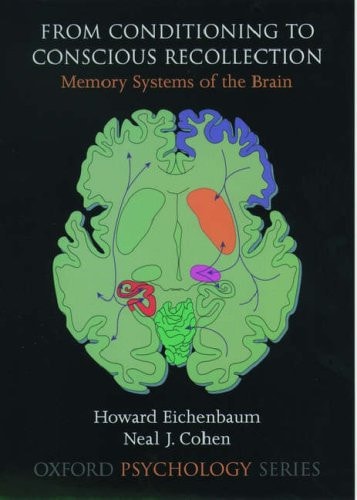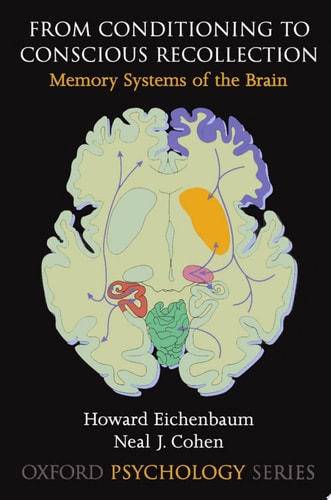
From Conditioning to Conscious Recollection: Memory Systems of the Brain
0
0
As an Amazon Associate and affiliate partner, Menrva Books earns from qualifying purchases. Learn more
Author Description
This cutting-edge book offers a theoretical account of the evolution of multiple memory systems of the brain. The authors conceptualize these memory systems from both behavioral and neurobiological perspectives, guided by three related principles. First, that our understanding of a wide range of memory phenomena can be advanced by breaking down memory into multiple forms with different operating characteristics. Second, that different forms of memory representation are supported by distinct brain pathways with circuitry and neural coding properties. Third, that the contributions of different brain systems can be compared and contrasted by distinguishing between dedicated (or specific) and elaborate (or general) memory systems. A primary goal of this work is to relate the neurobiological properties of dedicated and elaborate systems to their neuropsychological counterparts, and in so doing, account for the phenomenology of memory, from conditioning to conscious recollection.
Menrva's Summary
THE THESIS
This book investigates the theoretical framework of multiple memory systems within the brain, seeking to explain how neural circuitry supports the spectrum of memory from simple conditioning to complex conscious recollection. The authors, Howard Eichenbaum and Neal J. Cohen, utilize a synthesis of behavioral and neurobiological data to propose that memory is not a unitary function but a collection of distinct systems. Their argument rests on the premise that dedicated and elaborate memory systems operate through specific brain pathways, each characterized by unique neural coding properties and functional roles.
THE SCOPE MAP
What You Will Find
- A theoretical model distinguishing between dedicated and elaborate memory systems
- Analysis of the neurobiological properties of memory pathways
- Integration of neuropsychological findings with behavioral conditioning models
Scope Limits
- The text does not provide a comprehensive clinical guide for treating memory disorders
- It does not cover the full history of psychological research prior to the development of multiple memory system theory
THE AUTHORITY PERSPECTIVE
Experts recognize this work as a foundational text for understanding the modularity of memory in cognitive neuroscience. Readers frequently note the academic density of the prose, which is intended for students and researchers in the field of psychology and brain science.
Page Count:
583
Publication Date:
2004-01-01
Publisher:
Oxford University Press
ISBN-10:
0190292326
ISBN-13:
9780190292324
Psychology
Medical
Biology
Memory
Allied Health
Neuroscience