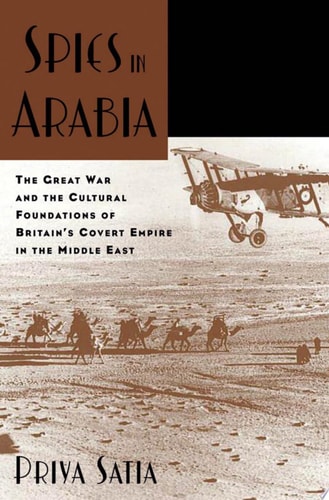
Spies in Arabia
0
0
As an Amazon Associate and affiliate partner, Menrva Books earns from qualifying purchases. Learn more
Author Description
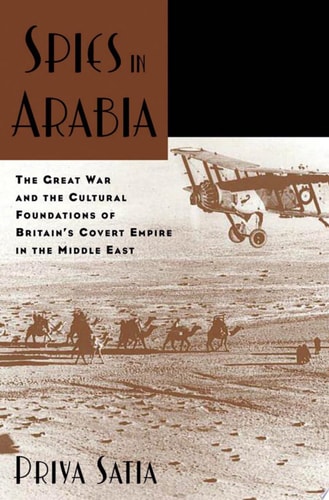
At the dawn of the twentieth century, British intelligence agents began to venture in increasing numbers to the Arab lands of the Ottoman Empire, a region of crucial geopolitical importance spanning present-day Iraq, Jordan, Syria, and Saudi Arabia. They were drawn by the twin objectives of securing the land route to India and finding adventure and spiritualism in a mysterious and ancient land. But these competing desires created a dilemma: how were they to discreetly and patriotically gather facts in a region they were drawn to for its legendary inscrutability and by the promise of fame and escape from Britain? In this book, Priya Satia tracks the intelligence community's tactical grappling with this problem and the myriad cultural, institutional, and political consequences of their methodological choices during and after the Great War. She tells the story of how an imperial state in thrall to the cultural notions of equivocal agents and beset by an equally captivated and increasingly assertive mass democracy invented a wholly new style of covert empire centered on the world's first brutal aerial surveillance regime in Iraq. Drawing on a wealth of archival sources--from the fictional to the recently declassified--this book explains how Britons reconciled genuine ethical scruples with the actual violence of their Middle Eastern empire. As it vividly demonstrates how imperialism was made fit for an increasingly democratic and anti-imperial world, what emerges is a new interpretation of the military, cultural, and political legacies of the Great War and of the British Empire in the twentieth century. Unpacking the romantic fascination with Arabia as the land of espionage, Spies in Arabia presents a stark tale of poetic ambition, war, terror, and failed redemption--and the prehistory of our present discontents.
Menrva's Summary
THE THESIS
This book investigates how British intelligence agents in the early twentieth century reconciled their romanticized perceptions of the Arab world with the brutal realities of imperial surveillance and warfare. Priya Satia, a professor of history, utilizes a vast array of archival materials—ranging from personal accounts and fiction to declassified government documents—to analyze the development of British covert operations. She argues that the British state, caught between democratic pressures at home and the desire for imperial expansion, developed a unique style of surveillance that relied heavily on aerial power in Iraq to maintain control while masking the violence of colonial rule.
THE SCOPE MAP
What You Will Find
- An analysis of the geopolitical shift in the Ottoman Empire across Iraq, Jordan, Syria, and Saudi Arabia.
- The methodology behind the invention of the world's first aerial surveillance regimes.
- A synthesis of primary source documents, including intelligence reports, personal diaries, and contemporary literature.
- An examination of the cultural and political consequences of British imperial policy during and after the Great War.
THE AUTHORITY PERSPECTIVE
Historians and political analysts frequently cite this work as a critical examination of the intersection between cultural imagination and state violence. Experts highlight the text for its dense, scholarly approach to the history of intelligence and its contribution to understanding the origins of modern Middle Eastern conflicts.
Page Count:
472
Publication Date:
2008-01-01
Publisher:
Oxford University Press
ISBN-10:
019971598X
ISBN-13:
9780199715985
History
Middle East
Imperialism
Intelligence
Military History
Community Tags
Similar Books