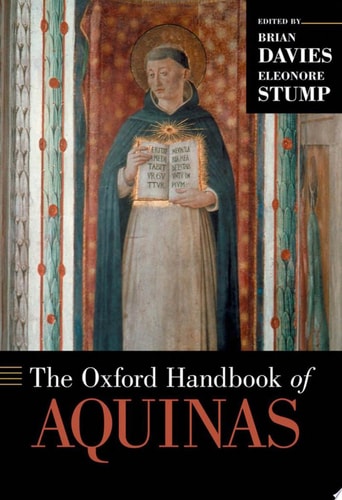
The Oxford Handbook of Aquinas
0
0
As an Amazon Associate and affiliate partner, Menrva Books earns from qualifying purchases. Learn more
Author Description
Thomas Aquinas (1224/6-1274) Lived An Active, Demanding Academic And Ecclesiastical Life That Ended While He Was Still Comparatively Young. He Nonetheless Produced Many Works, Varying In Length From A Few Pages To A Few Volumes. The Present Book Is An Introduction To This Influential Author And A Guide To His Thought On Almost All The Major Topics On Which He Wrote. The Book Begins With An Account Of Aquinas's Life And Works. The Next Section Contains A Series Of Essays That Set Aquinas In His Intellectual Context. They Focus On The Philosophical Sources That Are Likely To Have Influenced His Thinking, The Most Prominent Of Which Were Certain Greek Philosophers (chiefly Aristotle), Latin Christian Writers (such As Augustine), And Jewish And Islamic Authors (such As Maimonides And Avicenna). The Subsequent Sections Of The Book Address Topics That Aquinas Himself Discussed. These Include Metaphysics, The Existence And Nature Of God, Ethics And Action Theory, Epistemology, Philosophy Of Mind And Human Nature, The Nature Of Language, And An Array Of Theological Topics, Including Trinity, Incarnation, Sacraments, Resurrection, And The Problem Of Evil, Among Others. These Sections Include More Than Thirty Contributions On Topics Central To Aquinas's Own Worldview. The Final Sections Of The Volume Address The Development Of Aquinas's Thought And Its Historical Influence. Any Attempt To Present The Views Of A Philosopher In An Earlier Historical Period That Is Meant To Foster Reflection On That Thinker's Views Needs To Be Both Historically Faithful And Also Philosophically Engaged. The Present Book Combines Both Exposition And Evaluation Insofar As Its Contributors Have Space To Engage In Both. This Handbook Is Therefore Meant To Be Useful To Someone Wanting To Learn About Aquinas's Philosophy And Theology While Also Looking For Help In Philosophical Interaction With It.
Menrva's Summary
THE THESIS
This volume investigates the comprehensive philosophical and theological framework of Thomas Aquinas to provide a rigorous guide to his intellectual contributions. The editors, Brian L. Davies and Eleonore Stump, assemble a collection of essays from leading scholars to contextualize Aquinas within his historical milieu and analyze his arguments on metaphysics, ethics, and divinity. By balancing historical exposition with contemporary philosophical engagement, the text serves as a bridge between medieval scholasticism and modern inquiry.
THE SCOPE MAP
What You Will Find
- A detailed biographical account of Aquinas and a survey of his primary literary corpus.
- Analysis of intellectual influences including Aristotelian, Augustinian, Jewish, and Islamic thought.
- Examination of core topics such as metaphysics, epistemology, action theory, and the philosophy of mind.
- Theological investigations into the Trinity, the Incarnation, the problem of evil, and the sacraments.
THE AUTHORITY PERSPECTIVE
Scholars and students frequently identify this handbook as a foundational resource for navigating the complexities of Thomistic thought. Readers often note the academic density of the prose, which is designed for those seeking a sophisticated interaction with Aquinas's philosophical and theological arguments.
Page Count:
608
Publication Date:
2011-01-01
Publisher:
Oxford University Press
ISBN-10:
0199716994
ISBN-13:
9780199716999
Philosophy
Theology
Reference
Academic
Community Tags
Other Editions(3)
Similar Books



Reader Comments
Share Your Thoughts
No comments yet. Be the first to share your thoughts!