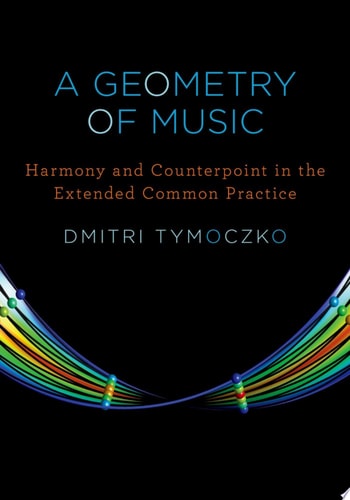
A Geometry of Music: Harmony and Counterpoint in the Extended Common Practice
0
0
As an Amazon Associate and affiliate partner, Menrva Books earns from qualifying purchases. Learn more
Author Description
How Is The Beatles' Help! Similar To Stravinsky's Dance Of The Adolescents? How Does Radiohead's Just Relate To The Improvisations Of Bill Evans? And How Do Chopin's Works Exploit The Non-euclidean Geometry Of Musical Chords? In This Groundbreaking Work, Author Dmitri Tymoczko Describes A New Framework For Thinking About Music That Emphasizes The Commonalities Among Styles From Medieval Polyphony To Contemporary Rock. Tymoczko Identifies Five Basic Musical Features That Jointly Contribute To The Sense Of Tonality, And Shows How These Features Recur Throughout The History Of Western Music. In The Process He Sheds New Light On An Age-old Question: What Makes Music Sound Good? A Geometry Of Music Provides An Accessible Introduction To Tymoczko's Revolutionary Geometrical Approach To Music Theory. The Book Shows How To Construct Simple Diagrams Representing Relationships Among Familiar Chords And Scales, Giving Readers The Tools To Translate Between The Musical And Visual Realms And Revealing Surprising Degrees Of Structure In Otherwise Hard-to-understand Pieces. Tymoczko Uses This Theoretical Foundation To Retell The History Of Western Music From The Eleventh Century To The Present Day. Arguing That Traditional Histories Focus Too Narrowly On The Common Practice Period From 1680-1850, He Proposes Instead That Western Music Comprises An Extended Common Practice Stretching From The Late Middle Ages To The Present. He Discusses A Host Of Familiar Pieces By A Wide Range Of Composers, From Bach To The Beatles, Mozart To Miles Davis, And Many In Between. A Geometry Of Music Is Accessible To A Range Of Readers, From Undergraduate Music Majors To Scientists And Mathematicians With An Interest In Music. Defining Its Terms Along The Way, It Presupposes No Special Mathematical Background And Only A Basic Familiarity With Western Music Theory. The Book Also Contains Exercises Designed To Reinforce And Extend Readers' Understanding, Along With A Series Of Appendices That Explore Th
Menrva's Summary
THE THESIS
This book investigates the underlying structural commonalities across Western music history by proposing a new geometrical framework for understanding harmony and counterpoint. Dmitri Tymoczko, a composer and music theorist, utilizes his expertise to bridge the gap between musicology and geometry. He argues that Western music, from the medieval period to contemporary rock, shares an extended common practice defined by five fundamental musical features. By mapping musical chords and scales into visual diagrams, he provides a unified method for analyzing diverse compositions.
THE SCOPE MAP
What You Will Find
- A comprehensive geometrical framework for visualizing relationships between chords and scales.
- An analysis of the extended common practice period spanning from the eleventh century to the present day.
- Comparative studies of diverse artists ranging from Bach and Mozart to The Beatles and Miles Davis.
- Pedagogical exercises and appendices designed to reinforce theoretical concepts for students and mathematicians.
THE AUTHORITY PERSPECTIVE
Experts and music theorists recognize this work as a significant contribution to the field of mathematical musicology. Readers frequently note that while the text introduces complex spatial concepts, it remains accessible to those with a basic foundation in music theory and minimal mathematical background.
Page Count:
480
Publication Date:
2011-01-01
Publisher:
Oxford University Press, Incorporated
ISBN-10:
0199714355
ISBN-13:
9780199714353
Non-Fiction
Musicology
Music theory
Mathematics
Counterpoint
Harmony
Music History
Community Tags
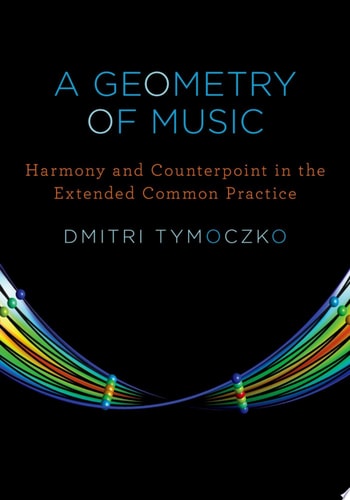
Other Editions(2)
Similar Books


Reader Comments
Share Your Thoughts
No comments yet. Be the first to share your thoughts!