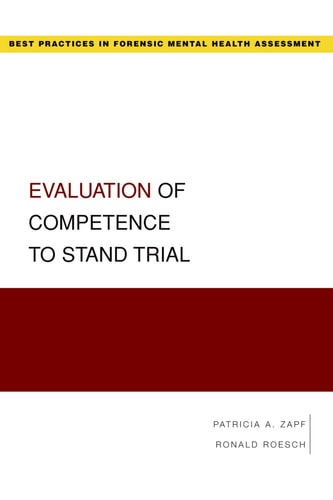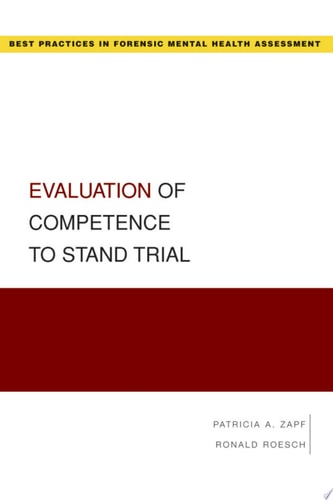
Evaluation of Competence to Stand Trial
0
0
As an Amazon Associate and affiliate partner, Menrva Books earns from qualifying purchases. Learn more
Author Description
Forensic Mental Health Assessment (fmha) Has Grown Into A Specialization Informed By Research And Professional Guidelines. This Series Presents Up-to-date Information On The Most Important And Frequently Conducted Forms Of Fmha. The 19 Topical Volumes Address Best Approaches To Practice For Particular Types Of Evaluation In The Criminal, Civil, And Juvenile/family Areas. Each Volume Contains A Thorough Discussion Of The Relevant Legal And Psychological Concepts, Followed By A Step-by-step Description Of The Assessment Process From Preparing For The Evaluation To Writing The Report And Testifying In Court. Volumes Include The Following Helpful Features: - Boxes That Zero In On Important Information For Use In Evaluations - Tips For Best Practice And Cautions Against Common Pitfalls - Highlighting Of Relevant Case Law And Statutes - Separate List Of Assessment Tools For Easy Reference - Helpful Glossary Of Key Terms For The Particular Topic In Making Recommendations For Best Practice, Authors Consider Empirical Support, Legal Relevance, And Consistency With Ethical And Professional Standards. These Volumes Offer Invaluable Guidance For Anyone Involved In Conducting Or Using Forensic Evaluations.
Menrva's Summary
THE THESIS
This volume investigates the complex legal and psychological requirements necessary to determine a defendant's competence to stand trial. Authors Patricia A. Zapf and Ronald Roesch, both established experts in forensic mental health, synthesize current empirical research and professional guidelines to provide a structured framework for clinicians. The text bridges the gap between clinical assessment and courtroom testimony, ensuring that practitioners can navigate the intersection of mental health and legal standards with precision.
THE SCOPE MAP
What You Will Find
- Comprehensive analysis of legal statutes and relevant case law regarding trial competence.
- Step-by-step methodology for conducting forensic evaluations from initial preparation to final reporting.
- Practical guidance on navigating the courtroom environment and providing expert testimony.
- Detailed glossaries and lists of standardized assessment tools for clinical application.
THE AUTHORITY PERSPECTIVE
Experts in the field of forensic psychology recognize this work as a foundational text for practitioners conducting competency evaluations. Readers frequently note the clarity of the procedural advice and the utility of the provided best-practice tips for avoiding common clinical pitfalls.
Page Count:
160
Publication Date:
2008-01-01
Publisher:
Oxford University Press
ISBN-10:
0199724164
ISBN-13:
9780199724161
Psychology
Law
Mental Health
Forensic Psychology