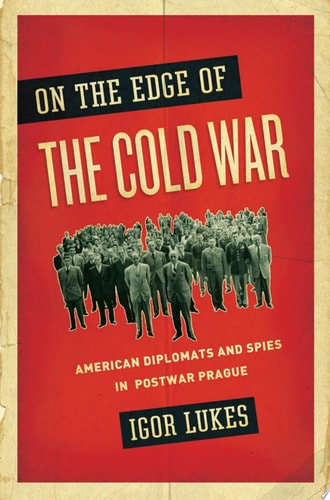
On the Edge of the Cold War
0
0
As an Amazon Associate and affiliate partner, Menrva Books earns from qualifying purchases. Learn more
Author Description
In 1945, Both The U.s. State Department And U.s. Intelligence Saw Czechoslovakia As The Master Key To The Balance Of Power In Europe And As A Chessboard For The Power-game Between East And West. Washington Believed That The Political Scene In Prague Was The Best Available Indicator Of Whether The United States Would Be Able To Coexist With Joseph Stalin's Soviet Union. In This Book, Igor Lukes Illuminates The End Of World War Ii And The Early Stages Of The Cold War In Prague, Showing Why The United States Failed To Prevent Czechoslovakia From Being Absorbed Into The Soviet Bloc. He Draws On Documents From Archives In The United States And The Czech Republic, On The Testimonies Of High Ranking Officers Who Served In The U.s. Embassy From 1945 To 1948, And On Unpublished Manuscripts, Diaries, And Memoirs. Exploiting This Wealth Of Evidence, Lukes Paints A Critical Portrait Of Ambassador Laurence Steinhardt. He Shows That Steinhardt's Groundless Optimism Caused Washington To Ignore Clear Signs That Democracy In Czechoslovakia Was In Trouble. Although U.s. Intelligence Officials Who Served In Prague Were Committed To The Mission Of Gathering Information And Protecting Democracy, They Were Defeated By The Czech And Soviet Clandestine Services That Proved To Be More Shrewd, Innovative, And Eager To Win. Indeed, Lukes Reveals That A Key American Officer May Have Been Turned By The Russians. For All These Reasons, When The Communists Moved To Impose Their Dictatorship, The U.s. Embassy And Its Cia Section Were Unprepared And Powerless. The Fall Of Czechoslovakia In 1948 Helped Deepen Cold War Tensions For Decades To Come. Vividly Written And Filled With Colorful Portraits Of The Key Participants, On The Edge Of The Cold War Offers An Authoritative Account Of This Key Foreign Policy Debacle.
Menrva's Summary
THE THESIS
This work investigates why the United States failed to prevent the absorption of Czechoslovakia into the Soviet bloc between 1945 and 1948. Igor Lukes, a professor of history and international relations, utilizes a vast array of primary source materials to analyze the diplomatic and intelligence failures that occurred in Prague. By examining the actions of Ambassador Laurence Steinhardt and the local U.S. intelligence apparatus, the author argues that institutional optimism and a lack of strategic foresight allowed Soviet-aligned forces to dismantle Czechoslovakian democracy with minimal American interference.
THE SCOPE MAP
What You Will Find
- Analysis of the geopolitical significance of Czechoslovakia as a barometer for U.S.-Soviet relations.
- Examination of the diplomatic tenure of Ambassador Laurence Steinhardt.
- Utilization of declassified documents from U.S. and Czech archives, including unpublished diaries and memoirs.
- Assessment of the operational effectiveness of U.S. intelligence versus Soviet and Czech clandestine services.
THE AUTHORITY PERSPECTIVE
Historians and political scientists frequently cite this work as a definitive account of the diplomatic collapse in post-war Prague. Experts highlight the author's rigorous use of archival evidence to provide a nuanced critique of American foreign policy during the early Cold War.
Page Count:
296
Publication Date:
2012-01-01
Publisher:
Oxford University Press, Incorporated
ISBN-10:
0199721742
ISBN-13:
9780199721740
History
Diplomacy
European History
International relations
Cold War
Community Tags
Similar Books