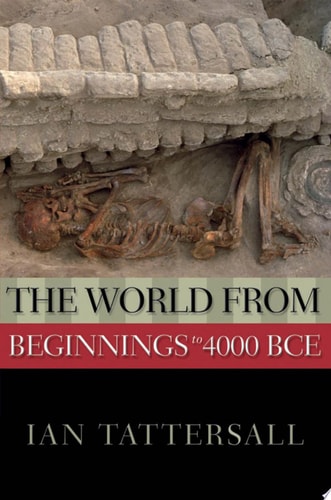
The World From Beginnings To 4000 Bce
0
0
As an Amazon Associate and affiliate partner, Menrva Books earns from qualifying purchases. Learn more
Author Description
To Be Human Is To Be Curious. And One Of The Things We Are Most Curious About Is How We Came To Be Who We Are--how We Evolved Over Millions Of Years To Become Creatures Capable Of Inquiring Into Our Own Evolution. In This Lively And Readable Introduction, Renowned Anthropologist Ian Tattersall Thoroughly Examines Both Fossil And Archaeological Records To Trace Human Evolution From The Earliest Beginnings Of Our Zoological Family, Hominidae, Through The Appearance Of Homo Sapiens To The Agricultural Revolution. He Begins With An Accessible Overview Of Evolutionary Theory And Then Explores The Major Turning Points In Human Evolution: The Emergence Of The Genus Homo, The Advantages Of Bipedalism, The Birth Of The Big Brain And Symbolic Thinking, Paleolithic And Neolithic Tool Making, And Finally The Enormously Consequential Shift From Hunter-gatherer To Agricultural Societies 10,000 Years Ago. Focusing Particularly On The Pattern Of Events And Innovations In Human Biological And Cultural Evolution, Tattersall Offers Illuminating Commentary On A Wide Range Of Topics, Including The Earliest Known Artistic Expressions, Ancient Burial Rites, The Beginnings Of Language, The Likely Causes Of Neanderthal Extinction, The Relationship Between Agriculture And Christianity, And The Still Unsolved Mysteries Of Human Consciousness. Complemented By A Wealth Of Illustrations And Written With The Grace And Accessibility For Which Tattersall Is Widely Admire, The World From Beginnings To 4000 Bce Invites Us To Take A Closer Look At The Strange And Distant Beings Who, Over The Course Of Millions Of Years, Would Become Us.
Menrva's Summary
THE THESIS
This work investigates the biological and cultural trajectory of the human species from the emergence of the Hominidae family to the dawn of the agricultural revolution. Renowned anthropologist Ian Tattersall utilizes fossil evidence and archaeological data to construct a comprehensive timeline of human development. He argues that human evolution is defined by specific, consequential shifts in cognition, tool-making, and social organization rather than a linear progression of improvement. By synthesizing complex evolutionary theory with accessible prose, the author provides a framework for understanding the transition from hunter-gatherer societies to the sedentary lifestyles that defined early civilization.
THE SCOPE MAP
What You Will Find
- Analysis of the emergence of the genus Homo and the physiological advantages of bipedalism.
- Examination of the development of symbolic thinking and the birth of the big brain.
- Review of Paleolithic and Neolithic tool-making techniques and their impact on survival.
- Discussion of the transition from nomadic hunter-gatherer societies to agricultural settlements.
- Exploration of early artistic expression, burial rites, and the origins of language.
THE AUTHORITY PERSPECTIVE
Experts frequently cite this text as a highly accessible entry point for readers interested in paleoanthropology and human origins. Readers note that Tattersall successfully balances academic rigor with a narrative style that remains engaging for non-specialists.
Page Count:
160
Publication Date:
2008-01-01
Publisher:
Oxford University Press
ISBN-10:
0199721718
ISBN-13:
9780199721719
Science
History
Archaeology
Evolutionary Biology
Anthropology
Prehistory
Community Tags
Other Editions(3)
Similar Books






Reader Comments
Share Your Thoughts
No comments yet. Be the first to share your thoughts!