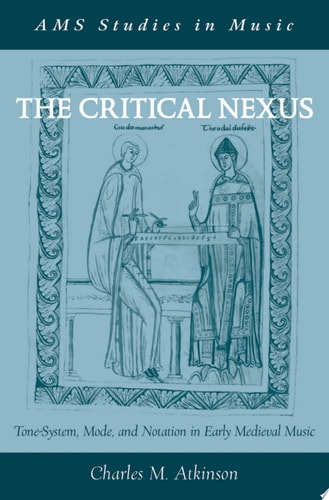
Critical Nexus: Tone-System, Mode, and Notation in Early Medieval Music
0
0
As an Amazon Associate and affiliate partner, Menrva Books earns from qualifying purchases. Learn more
Author Description
The Critical Nexus Confronts An Important And Vexing Enigma Of Early Writings On Music: Why Chant, Which Was Understood To Be Divinely Inspired, Needed To Be Altered In Order To Work Within The Then-operative Modal System. To Unravel This Mystery, Charles Atkinson Creates A Broad Framework That Moves From Greek Harmonic Theory To The Various Stages In The Transmission Of Roman Chant, Citing Numerous Music Treatises From The Sixth To The Twelfth Century. Out Of This Examination Emerges The Central Point Behind The Problem: The Tone-system Advocated By Writers Coming From The Greek Harmonic Tradition Was Not Suited To The Notation Of Chant And That This Basic Incompatibility Led To The Creation Of New Theoretical Constructs. By Tracing The Path Of Subsequent Adaptation At The Nexus Of Tone-system, Mode, And Notation, Atkinson Promises New And Far-reaching Insights Into What Mode Meant To The Medieval Musician And How The System Responded To Its Inherent Limitations. Through A Detailed Examination Of The Major Musical Treatises From The Sixth Through The Twelfth Centuries, This Text Establishes A Central Dichotomy Between Classical Harmonic Theory And The Practices Of The Christian Church. Atkinson Builds The Foundation For A Broad And Original Reinterpretation Of The Modal System And How It Relates To Melody, Grammar, And Notation. This Book Will Be Of Interest To All Musicologists, Music Theorists Working On Mode, Early Music Specialists, Chant Scholars, And Medievalists Interested In Music.
Menrva's Summary
THE THESIS
This book investigates the fundamental incompatibility between the Greek harmonic tradition and the practical requirements of early medieval chant notation. Charles M. Atkinson, a scholar of medieval music, utilizes a vast array of musical treatises spanning the sixth to the twelfth centuries to reconstruct the theoretical evolution of the modal system. He argues that the necessity of reconciling divinely inspired chant with existing Greek theoretical frameworks forced medieval thinkers to invent new constructs, fundamentally altering the trajectory of Western musical notation.
THE SCOPE MAP
What You Will Find
- A comprehensive analysis of musical treatises from the sixth through the twelfth centuries.
- A detailed examination of the transition from Greek harmonic theory to the Roman chant tradition.
- A methodological framework for understanding the relationship between melody, grammar, and notation.
- An exploration of the inherent limitations of the tone-system as applied to early liturgical music.
THE AUTHORITY PERSPECTIVE
Musicologists and medievalists regard this text as a rigorous, foundational study of the development of modal theory. Scholars frequently note the technical density of the prose, which provides a specialized resource for those researching the intersection of classical theory and Christian liturgical practice.
Page Count:
320
Publication Date:
2009-01-01
Publisher:
Ebsco Publishing
ISBN-10:
0199722382
ISBN-13:
9780199722389
Music History
Musicology
Music theory
Community Tags
Similar Books