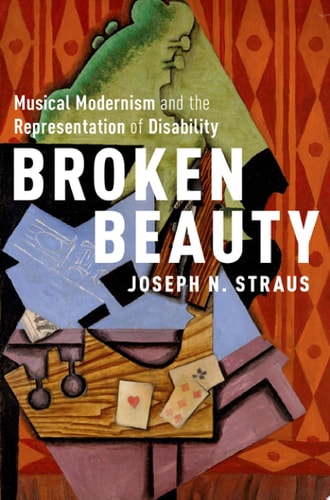
Broken Beauty: Musical Modernism and the Representation of Disability
0
0
As an Amazon Associate and affiliate partner, Menrva Books earns from qualifying purchases. Learn more
Author Description
Preeminent music theorist and leader in the study of music and disability Joseph Straus presents a truly groundbreaking take on musical modernism--demonstrating in an expansive and vivid multimedia presentation that modernist music is inextricably entwined with attitudes toward disability. In Broken Beauty, Straus argues that the most characteristic features of musical modernism--fractured forms, immobilized harmonies, conflicting textural layers, radical simplification of means in some cases, and radical complexity and hermeticism in others--can be understood as musical depictions of disability conditions, including deformity/disfigurement, mobility impairment, madness, idiocy, and autism. Against the traditional medical model of disability, which sees it as a bodily defect requiring diagnosis and normalization or cure, this new sociocultural model of disability sees it as cultural artifact, something that is created by and creates culture. Straus places this revised model of disability against a wide range of canonical, high-art concert music from the first decades of the century through the 1950s. Broken Beauty illustrates how disability is right at the core of musical modernism; it is one of the things that musical modernism is fundamentally about.
Menrva's Summary
THE THESIS
How does the aesthetic framework of musical modernism reflect and construct cultural attitudes toward disability? Joseph N. Straus, a prominent music theorist, utilizes a sociocultural model of disability to re-examine the canon of early-to-mid-20th-century concert music. He argues that the structural characteristics of modernist compositions—such as fragmentation, harmonic immobilization, and textural conflict—function as musical representations of various disability conditions rather than mere abstract formal choices.
THE SCOPE MAP
What You Will Find
- Analysis of canonical high-art concert music from the early 20th century through the 1950s.
- A sociocultural framework for interpreting disability as a cultural artifact.
- Comparative analysis between musical techniques and specific disability conditions including mobility impairment, neurodivergence, and disfigurement.
Scope Limits
- The text does not provide a comprehensive medical history of the composers discussed.
- The analysis focuses primarily on Western concert music and does not extend to popular or non-Western musical traditions.
THE AUTHORITY PERSPECTIVE
Scholars in the fields of musicology and disability studies recognize this work as a significant contribution to the intersection of aesthetic theory and social identity. Readers frequently note the academic density of the prose, which requires a foundational understanding of both music theory and critical disability theory to fully engage with the author's arguments.
Page Count:
219
Publication Date:
2018-01-01
Publisher:
Oxford University Press
ISBN-10:
0190871229
ISBN-13:
9780190871222
Modernism
Music History
Cultural History
Humanities
Musicology
Music
Music theory
Community Tags
Similar Books