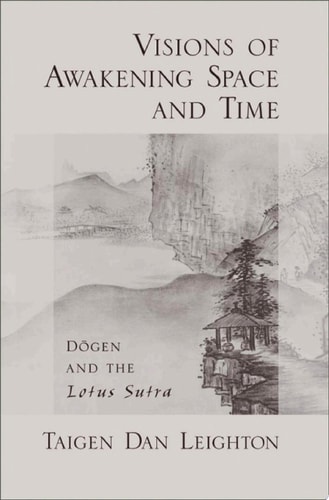
Visions of Awakening Space and Time: Dogen and the Lotus Sutra
0
0
As an Amazon Associate and affiliate partner, Menrva Books earns from qualifying purchases. Learn more
Author Description
As A Religion Concerned With Universal Liberation, Zen Grew Out Of A Buddhist Worldview Very Different From The Currently Prevalent Scientific Materialism. Indeed, Says Taigen Dan Leighton, Zen Cannot Be Fully Understood Outside Of A Worldview That Sees Reality Itself As A Vital, Dynamic Agent Of Awareness And Healing. In This Book, Leighton Explicates That Worldview Through The Writings Of The Zen Master Eihei Dogen (1200-1253), Considered The Founder Of The Japanese Soto Zen Tradition, Which Currently Enjoys Increasing Popularity In The West. The Lotus Sutra, Arguably The Most Important Buddhist Scripture In East Asia, Contains A Famous Story About Bodhisattvas (enlightening Beings) Who Emerge From Under The Earth To Preserve And Expound The Lotus Teaching In The Distant Future. The Story Reveals That The Buddha Only Appears To Pass Away, But Actually Has Been Practicing, And Will Continue To Do So, Over An Inconceivably Long Life Span. Leighton Traces Commentaries On The Lotus Sutra From A Range Of Key East Asian Buddhist Thinkers, Including Daosheng, Zhiyi, Zhanran, Saigyo, Myoe, Nichiren, Hakuin, And Ryokan. But His Main Focus Is Eihei Dogen, The 13th Century Japanese Soto Zen Founder Who Imported Zen From China, And Whose Profuse, Provocative, And Poetic Writings Are Important To The Modern Expansion Of Buddhism To The West. Dogen's Use Of This Sutra Expresses The Critical Role Of Mahayana Vision And Imagination As The Context Of Zen Teaching, And His Interpretations Of This Story Furthermore Reveal His Dynamic Worldview Of The Earth, Space, And Time Themselves As Vital Agents Of Spiritual Awakening. Leighton Argues That Dogen Uses The Images And Metaphors In This Story To Express His Own Religious Worldview, In Which Earth, Space, And Time Are Lively Agents In The Bodhisattva Project. Broader Awareness Of Dogen's Worldview And Its Implications, Says Leighton, Can Illuminate The Possibilities For Contemporary Approaches To Primary Mahayana Concepts And Practice.
Menrva's Summary
THE THESIS
This book investigates how the 13th-century Zen master Eihei Dogen utilized the Lotus Sutra to construct a dynamic, non-materialist worldview where space, time, and the earth function as active agents of spiritual awakening. Taigen Dan Leighton, a scholar and Zen teacher, draws upon his extensive knowledge of East Asian Buddhist history to analyze Dogen's poetic and provocative writings. He argues that by reinterpreting the Lotus Sutra's imagery, Dogen provides a framework that challenges modern scientific materialism and offers a more expansive, vital understanding of Mahayana Buddhist practice.
THE SCOPE MAP
What You Will Find
- A comprehensive analysis of the Lotus Sutra's influence on the Japanese Soto Zen tradition.
- Comparative studies of Buddhist thinkers including Daosheng, Zhiyi, Nichiren, Hakuin, and Ryokan.
- An examination of Dogen's unique philosophical treatment of time, space, and the earth as sentient, awakening forces.
- A scholarly exploration of how Mahayana vision and imagination serve as the foundational context for Zen teaching.
THE AUTHORITY PERSPECTIVE
Scholars and practitioners of Zen Buddhism recognize this work as a significant contribution to the study of Dogen's philosophical depth. Readers frequently note the academic rigor of the text, which serves as a foundational resource for those seeking to understand the intersection of classical Buddhist scripture and Zen practice.
Page Count:
208
Publication Date:
2007-01-01
Publisher:
Ebsco Publishing
ISBN-10:
019972427X
ISBN-13:
9780199724277
History
Spirituality
Philosophy
Religion
Buddhist Philosophy
Zen
Buddhism
Community Tags
Similar Books