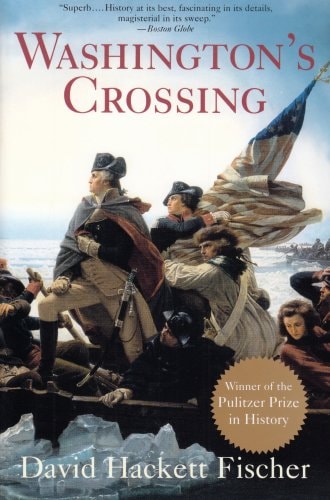
Washington's Crossing
0
0
As an Amazon Associate and affiliate partner, Menrva Books earns from qualifying purchases. Learn more
Author Description
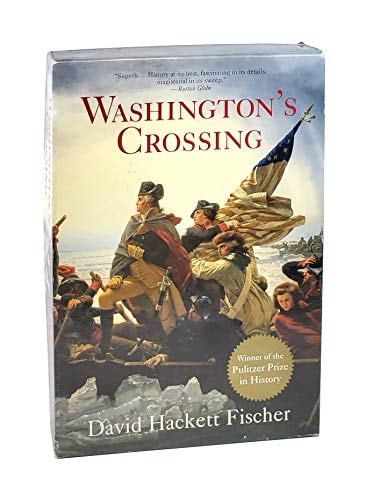
Six Months After The Declaration Of Independence, The American Revolution Was All But Lost. A Powerful British Force Had Routed The Americans At New York, Occupied Three Colonies, And Advanced Within Sight Of Philadelphia. Yet, As David Hackett Fischer Recounts In This Riveting History, George Washington--and Many Other Americans--refused To Let The Revolution Die. On Christmas Night, As A Howling Nor'easter Struck The Delaware Valley, He Led His Men Across The River And Attacked The Exhausted Hessian Garrison At Trenton, Killing Or Capturing Nearly A Thousand Men. A Second Battle Of Trenton Followed Within Days. The Americans Held Off A Counterattack By Lord Cornwallis's Best Troops, Then Were Almost Trapped By The British Force. Under Cover Of Night, Washington's Men Stole Behind The Enemy And Struck Them Again, Defeating A Brigade At Princeton. The British Were Badly Shaken. In Twelve Weeks Of Winter Fighting, Their Army Suffered Severe Damage, Their Hold On New Jersey Was Broken, And Their Strategy Was Ruined. Fischer's Richly Textured Narrative Reveals The Crucial Role Of Contingency In These Events. We See How The Campaign Unfolded In A Sequence Of Difficult Choices By Many Actors, From Generals To Civilians, On Both Sides. While British And German Forces Remained Rigid And Hierarchical, Americans Evolved An Open And Flexible System That Was Fundamental To Their Success. The Startling Success Of Washington And His Compatriots Not Only Saved The Faltering American Revolution, But Helped To Give It New Meaning.
Menrva's Summary
THE THESIS
How did a series of desperate winter maneuvers by George Washington and his Continental Army fundamentally alter the trajectory of the American Revolution? David Hackett Fischer, a distinguished historian, utilizes extensive primary source documentation and military records to reconstruct the pivotal New Jersey campaign of 1776-1777. He argues that the success of the American forces was not inevitable but rather the result of a flexible, decentralized command structure that contrasted sharply with the rigid, hierarchical approach of the British and Hessian forces. By examining the tactical decisions made by both leaders and common soldiers, Fischer demonstrates how contingency and individual agency saved the faltering rebellion.
THE SCOPE MAP
What You Will Find
- Detailed analysis of the Delaware River crossing and the subsequent battles of Trenton and Princeton.
- Comparative study of British, Hessian, and American military organizational structures and command philosophies.
- Examination of the role of civilian actors and local intelligence in shaping military outcomes.
- Primary source evidence including personal diaries, military dispatches, and contemporary correspondence.
THE AUTHORITY PERSPECTIVE
Historians frequently cite this work as a definitive account of the Ten Crucial Days that saved the American Revolution. Scholars note the meticulous research and the author's ability to balance high-level strategic analysis with the granular experiences of soldiers on the ground.
Page Count:
517
Publication Date:
2004-01-01
Publisher:
Oxford University Press
ISBN-10:
0199726604
ISBN-13:
9780199726608
Biography
Non-Fiction
History
Military History
American Revolution
Community Tags
Other Editions(5)

Similar Books





Reader Comments
Share Your Thoughts
No comments yet. Be the first to share your thoughts!