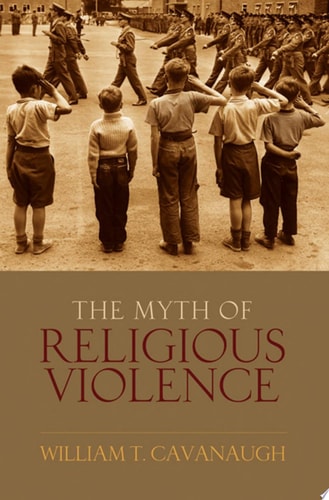
The Myth of Religious Violence
0
0
As an Amazon Associate and affiliate partner, Menrva Books earns from qualifying purchases. Learn more
Author Description
The Idea That Religion Has A Dangerous Tendency To Promote Violence Is Part Of The Conventional Wisdom Of Western Societies, And It Underlies Many Of Our Institutions And Policies, From Limits On The Public Role Of Religion To Efforts To Promote Liberal Democracy In The Middle East. William T. Cavanaugh Challenges This Conventional Wisdom By Examining How The Twin Categories Of Religion And The Secular Are Constructed. A Growing Body Of Scholarly Work Explores How The Category 'religion' Has Been Constructed In The Modern West And In Colonial Contexts According To Specific Configurations Of Political Power. Cavanaugh Draws On This Scholarship To Examine How Timeless And Transcultural Categories Of 'religion And 'the Secular' Are Used In Arguments That Religion Causes Violence. He Argues Three Points: 1) There Is No Transhistorical And Transcultural Essence Of Religion. What Counts As Religious Or Secular In Any Given Context Is A Function Of Political Configurations Of Power; 2) Such A Transhistorical And Transcultural Concept Of Religion As Non-rational And Prone To Violence Is One Of The Foundational Legitimating Myths Of Western Society; 3) This Myth Can Be And Is Used To Legitimate Neo-colonial Violence Against Non-western Others, Particularly The Muslim World.
Menrva's Summary
THE THESIS
Does the widely accepted belief that religion is inherently prone to violence hold up under historical and political scrutiny? William T. Cavanaugh, a professor of Catholic studies, challenges the secular-liberal consensus that religion acts as a unique catalyst for conflict. By analyzing the historical construction of the categories of 'religion' and 'the secular,' he argues that these concepts are not timeless truths but are instead political tools used to justify Western state power and neo-colonial interventions.
THE SCOPE MAP
What You Will Find
- Historical analysis of the construction of the 'religion' and 'secular' binary in Western thought.
- Critique of the 'myth of religious violence' as a foundational legitimating narrative for the modern state.
- Examination of how these categories are deployed to justify military and political actions in the Middle East.
- Theoretical framework regarding the fluidity of what constitutes 'religious' versus 'secular' behavior across different political contexts.
THE AUTHORITY PERSPECTIVE
Scholars and theologians frequently cite this work as a critical intervention in the study of secularism and political theology. Readers often note the academic density of the prose, which requires a strong background in political theory to fully grasp the author's nuanced arguments.
Page Count:
296
Publication Date:
2009-01-01
Publisher:
Oxford University Press
ISBN-10:
0199736642
ISBN-13:
9780199736645
History
Religion
Philosophy
Sociology
Community Tags
Similar Books