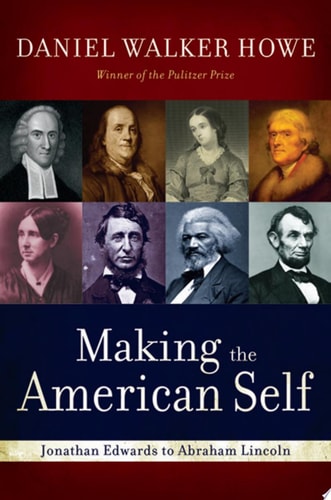
Making the American Self
0
0
As an Amazon Associate and affiliate partner, Menrva Books earns from qualifying purchases. Learn more
Author Description
Originally Published In 1997 And Now Back In Print, Making The American Self By Daniel Walker Howe, The Pulitzer Prize-winning Author Of What Hath God Wrought, Charts The Genesis And Fascinating Trajectory Of A Central Idea In American History. One Of The Most Precious Liberties Americans Have Always Cherished Is The Ability To Make Something Of Themselves--to Choose Not Only An Occupation But An Identity. Examining Works By Benjamin Franklin, Jonathan Edwards, Abraham Lincoln, Frederick Douglass, Henry David Thoreau, Ralph Waldo Emerson, Margaret Fuller, And Others, Howe Investigates How Americans In The 18th And 19th Centuries Engaged In The Process Of Self-construction, Self-improvement, And The Pursuit Of Happiness. He Explores As Well How Americans Understood Individual Identity In Relation To The Larger Body Politic, And Argues That The Conscious Construction Of The Autonomous Self Was In Fact Essential To American Democracy--that It Both Shaped And Was In Turn Shaped By American Democratic Institutions. The Thinkers Described In This Book, Howe Writes, Believed That, To The Extent Individuals Exercised Self-control, They Were Making Free Institutions--liberal, Republican, And Democratic--possible. And As The Scope Of American Democracy Widened So Too Did The Practice Of Self-construction, Moving Beyond The Preserve Of Elite White Males To Potentially All Americans. Howe Concludes That The Time Has Come To Ground Our Democracy Once Again In Habits Of Personal Responsibility, Civility, And Self-discipline Esteemed By Some Of America's Most Important Thinkers. Erudite, Beautifully Written, And More Pertinent Than Ever As We Enter A New Era Of Individual And Governmental Responsibility, Making The American Self Illuminates An Impulse At The Very Heart Of The American Experience.
Menrva's Summary
THE THESIS
This book investigates the historical origins and evolution of the American ideal of self-construction as a foundational element of democratic participation. Daniel Walker Howe, a Pulitzer Prize-winning historian, utilizes a biographical and analytical framework to examine how prominent 18th and 19th-century figures conceptualized individual identity. By analyzing the writings of thinkers such as Benjamin Franklin, Abraham Lincoln, and Frederick Douglass, Howe argues that the conscious development of an autonomous self was essential to the stability and growth of American democratic institutions. He posits that personal responsibility and self-discipline were viewed by these figures as the necessary precursors to maintaining a free, republican society.
THE SCOPE MAP
What You Will Find
- Analysis of intellectual history spanning the 18th and 19th centuries in the United States.
- Examination of primary texts by figures including Jonathan Edwards, Henry David Thoreau, Ralph Waldo Emerson, and Margaret Fuller.
- A study of the intersection between individual identity formation and the development of American democratic institutions.
- A historical argument linking personal self-control and civic responsibility to the preservation of liberal democracy.
THE AUTHORITY PERSPECTIVE
Scholars and historians frequently cite this work as a significant contribution to the study of American intellectual history and the development of the national character. Readers often note the academic rigor of the prose, which provides a dense, well-researched exploration of how early American thinkers reconciled individual autonomy with collective political life.
Page Count:
352
Publication Date:
2009-01-01
Publisher:
Oxford University Press
ISBN-10:
0199736731
ISBN-13:
9780199736737
Biography
Philosophy
History
American History
Community Tags
Other Editions(2)
Similar Books














